

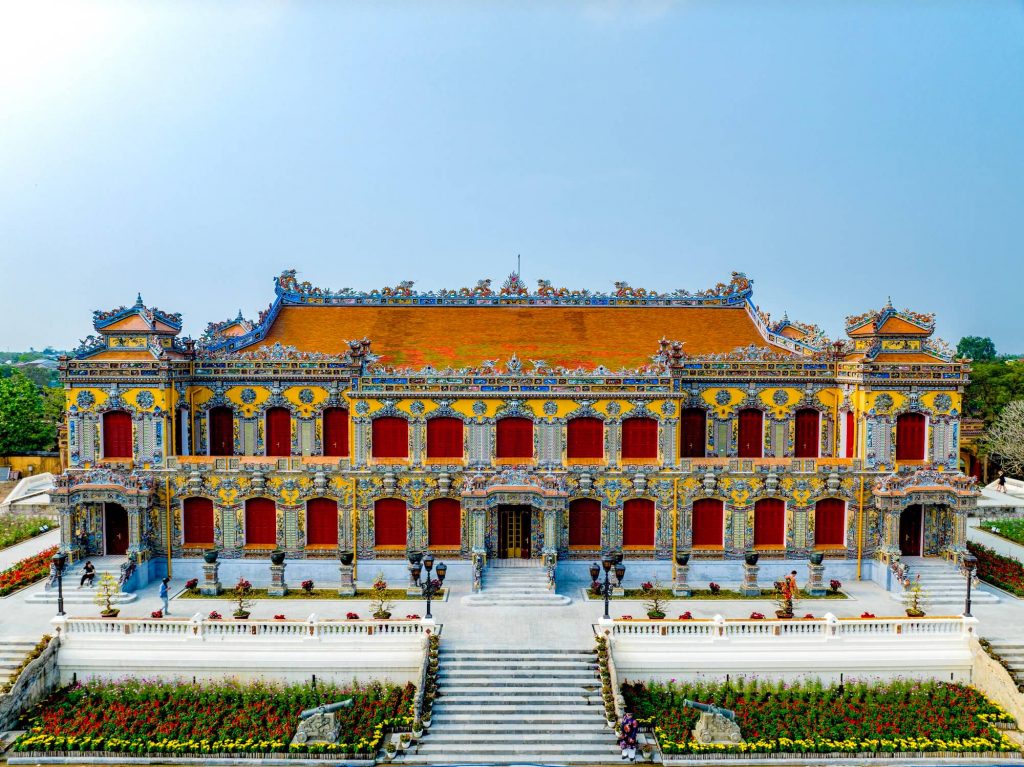
Once forgotten in the ashes of history for nearly 80 years, Dien Kien Trung – the most magnificent palace of the Nguyen dynasty – has now "awakened" and become an unmissable check-in location in Hue. If you want to admire an architectural masterpiece that is both ancient and uniquely European, join Queen Cafe Bus to discover all the sightseeing experiences in this article!
1. Information to know before visiting Kientrung Palace
1.1. Where is the Kiến Trung Palace located in the Imperial City of Hue?
Located right in the center of the Forbidden City, the Hall of Central Harmony is one of the most important structures in the complex. The Imperial City of HueFrom Ngọ Môn Gate, visitors walk across the empty courtyard of Thái Hòa Palace and continue northward, where they can immediately recognize this structure with its unique architecture, standing out in the ancient space.
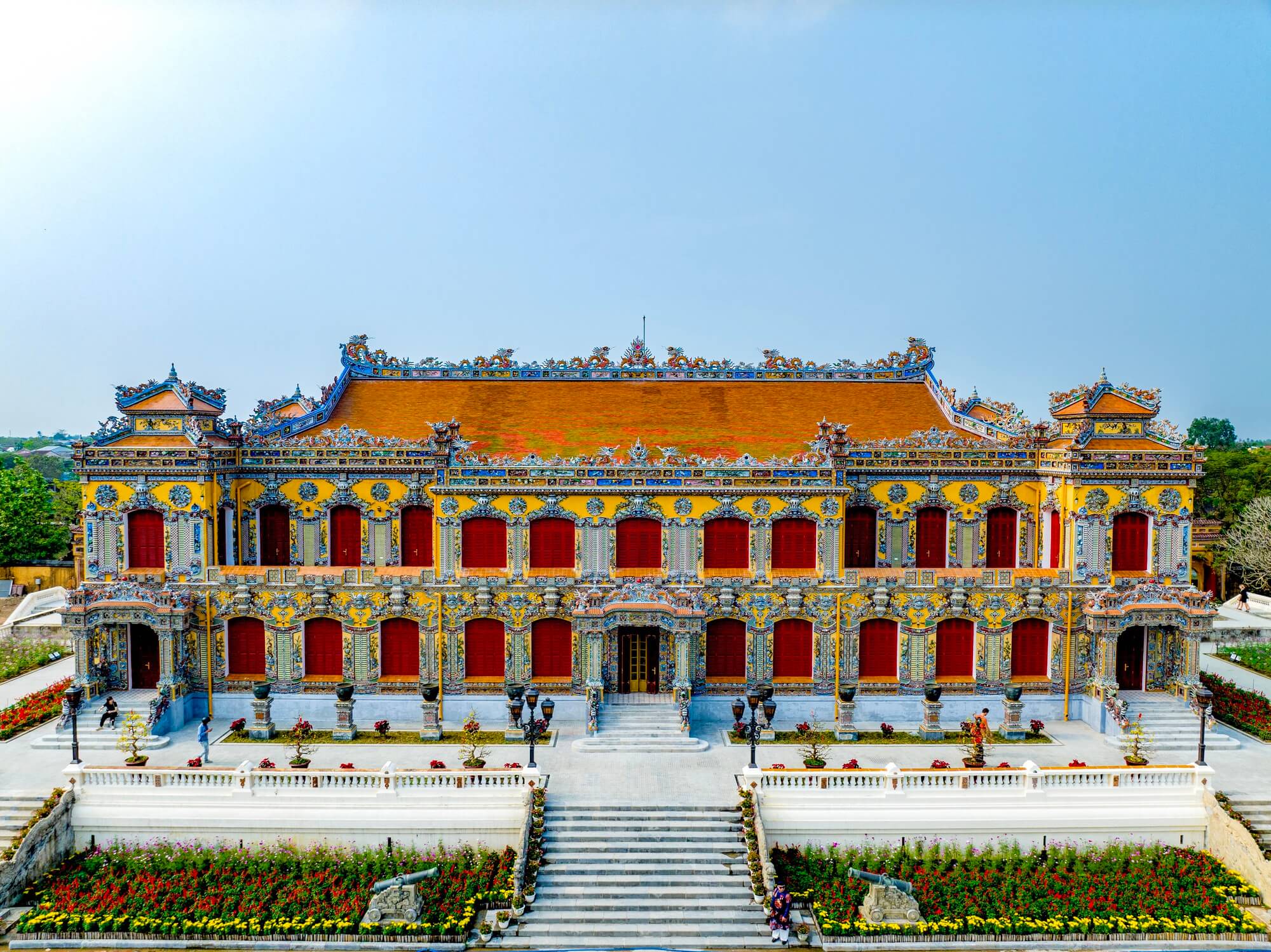
Thanks to its central location, Dien Kien Trung in Hue not only serves as a symbol of royal power, but also allows visitors to conveniently combine visits to many other historical sites in one seamless journey.
Best Hostels & Hotels in Hue City
Find the perfect hostel with top ratings on Hostelworld. Secure your bed today with zero booking fees!
1.2. Latest opening hours and admission prices.
- Opening hours: 7:00 AM – 5:30 PM (summer) | 7:30 AM – 5:00 PM (winter)
The admission fee for adults is 200,000 VND per visit, while children pay 40,000 VND per visit. Visitors do not need to purchase a separate ticket to enter the Kien Trung Palace; simply keep your ticket to the Imperial City, which is included in the tour itinerary.
This ticket price applies to the entire Imperial City area, including many notable sites such as the Noon Gate, the Temple of the Earth, the Thai Hoa Palace, and the Kien Trung Palace.
Additionally, it is advisable to arrive early in the day to have sufficient time to fully experience the unique cultural and historical atmosphere of this place.
1.3. The ideal time of day to visit Dien Kien Trung.
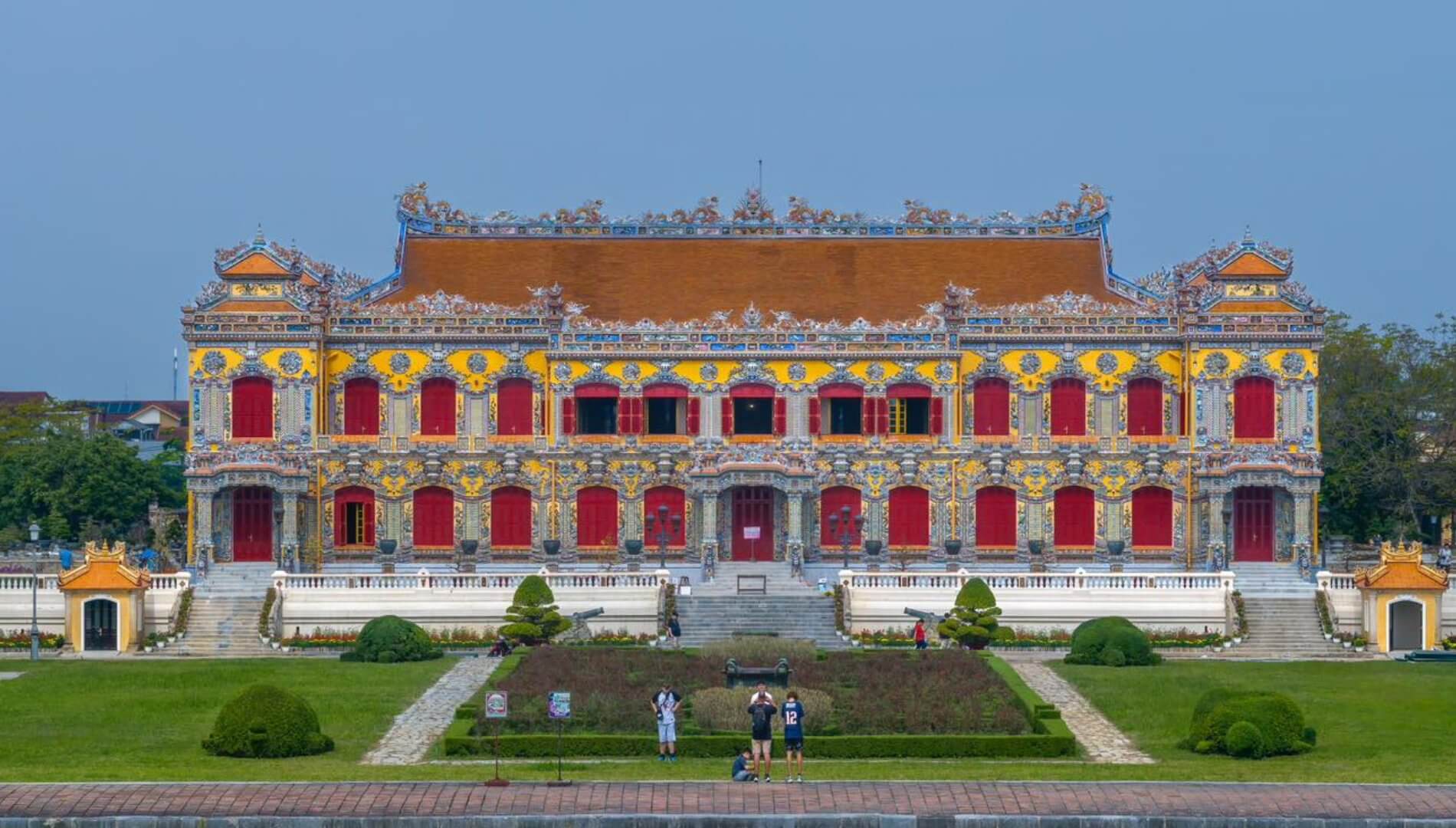
Around 7:30–9:00 a.m. is the ideal time to explore because the weather is cool, and soft golden light shines obliquely through the rows of mosaic walls.
Late afternoon after 3:30 p.m. is also when the space becomes peaceful, devoid of crowds of tourists, making it ideal for taking photos and enjoying the atmosphere of the ancient royal palace.
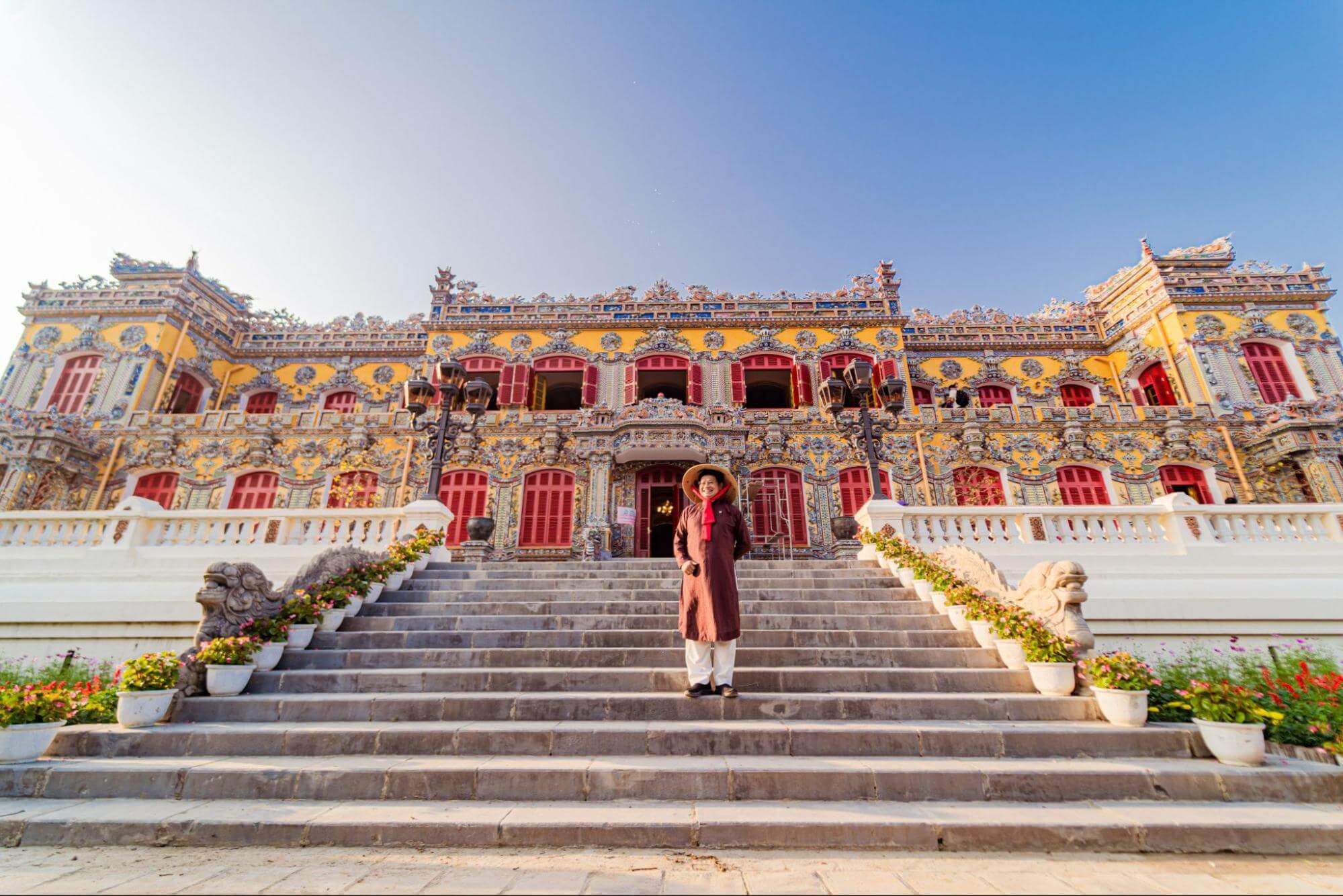
If you plan to take photos in traditional costumes, shoot travel videos, or create a personal photo album, you should take advantage of these time slots to ensure beautiful image quality and avoid the hot weather.
2. Experience visiting and "living virtually" at Dien Kien Trung
2.1. Tips for getting around the Imperial City
The Imperial City of Hue covers a large area with many important sites, so knowing how to get around will help you save time and not miss any highlights, especially Hue tourist destinations Recently restored – Kiến Trung Temple. Right from the start Noon GateYou should bring a tour map (available at the ticket counter or downloadable via QR code) to plan your route.
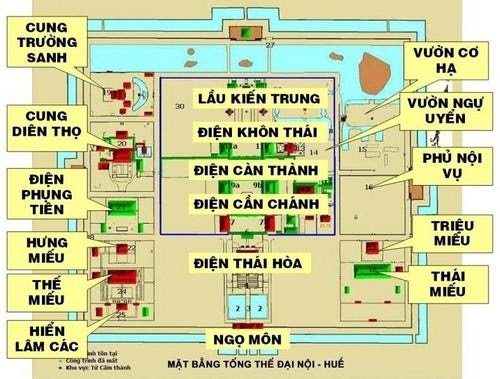
To save effort, you can choose the service. electric vehicle, stop at key points such as Thai Hoa Palace, The Temple, then continue walking to the Kiến Trung Palace – located on the main northern axis. If you want to explore every detail, choose walking combined with photography will provide a more complete experience.
Please wear athletic shoes or soft-soled sandals, bring water, and wear a sun hat. If you visit during the summer or peak hours, prioritize visiting shaded areas first, then return to outdoor attractions to better conserve your energy for the entire journey. The Imperial City of Hue.
2.2. Suggestions for appropriate outfits to get the best photos.
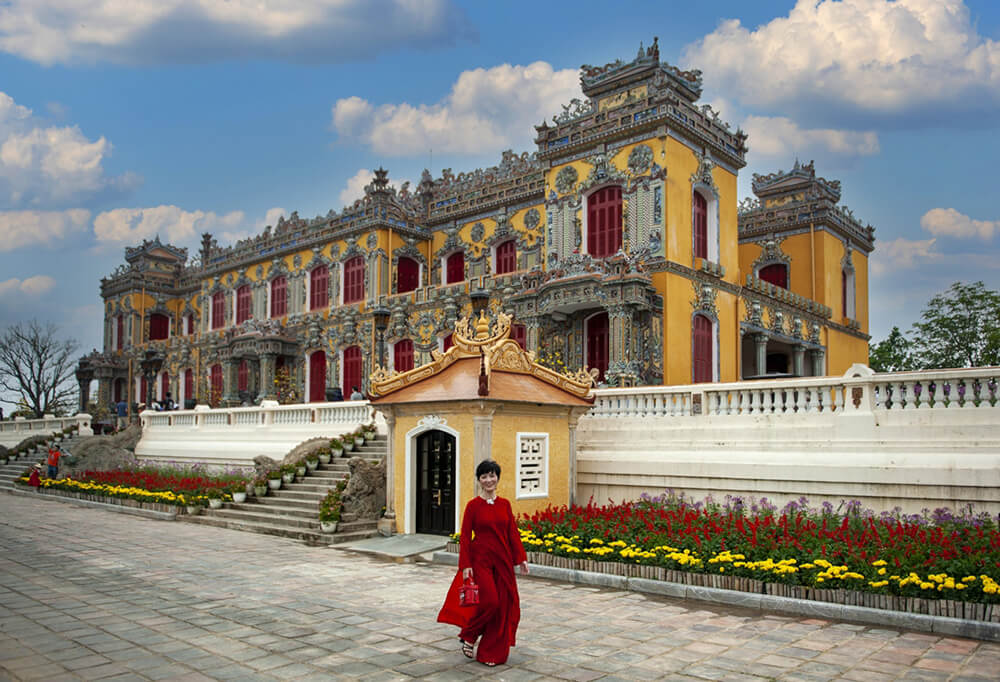
With its architecture blending Asian and European styles, Dien Kien Trung is particularly suited to classic or traditional attire. Women should opt for ao dai, vintage dresses, or solid-colored long dresses; men can wear white shirts paired with fabric pants or traditional costumes if they wish to embody royalty.
Beige, white, brown, or pastel colors will look very harmonious with the antique walls and distinctive ceramic mosaic patterns.
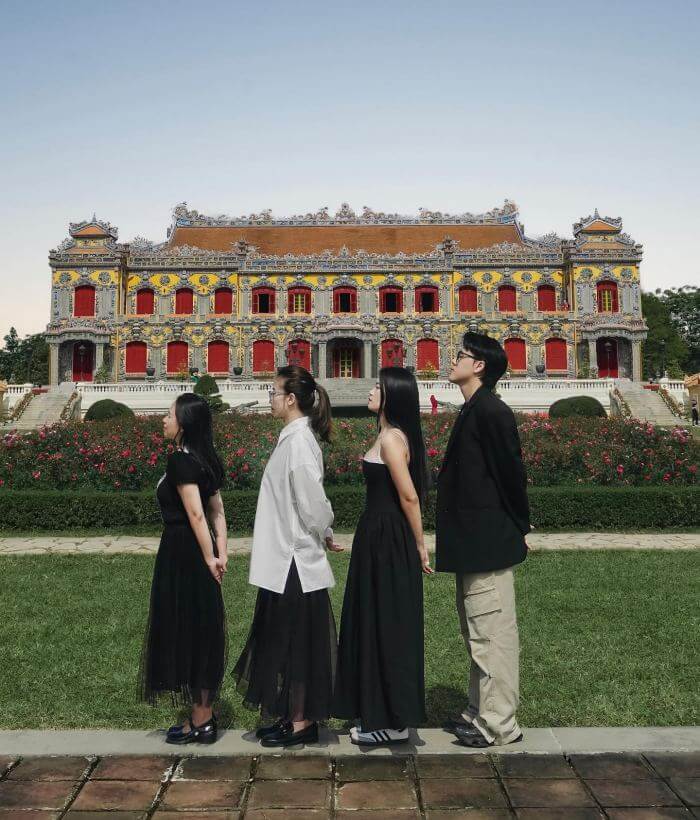
2.3. Don't miss out on the costume rental service to transform into kings and queens.
Within the Imperial City grounds, there are many places that rent out traditional costumes, including Japanese-style robes, five-piece suits, headscarves, and royal hats. Prices range from 100,000 – 200,000 VND/set, including accessories and photography assistance. This is an exciting experience that allows you to take pictures with a royal feel and learn more about the Nguyen dynasty's attire at Dien Kien Trung in Hue's imperial city.
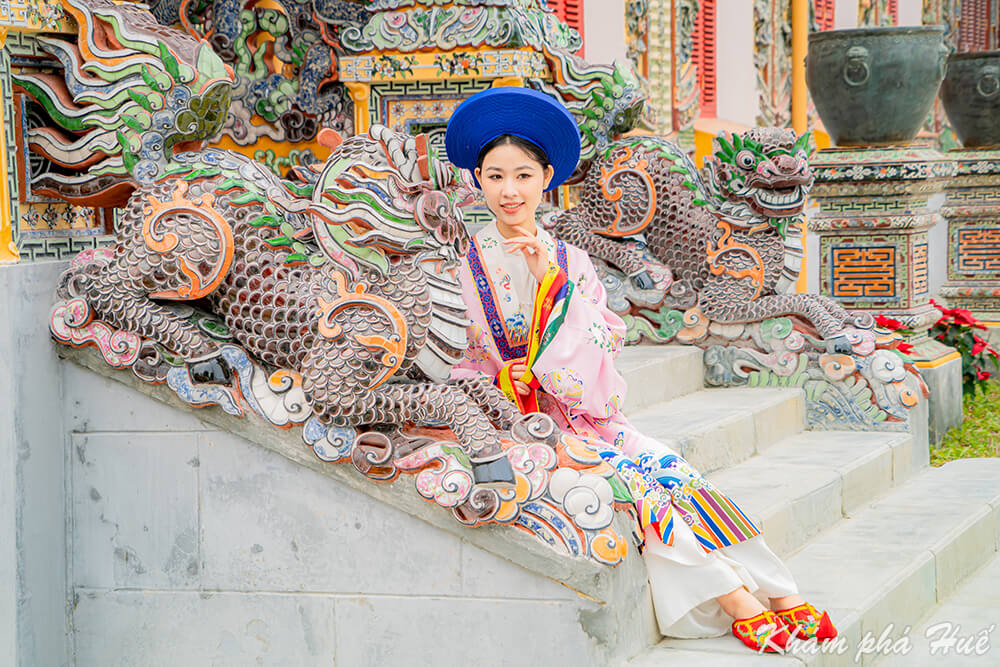
2.4. Use QR codes at exhibition points to learn more about the relics.
In many areas of Dien Kien Trung, especially the artifact exhibition rooms, QR codes are placed for visitors to scan and read detailed information. This format is very convenient for those who want to learn more without a tour guide. You should bring headphones and a fully charged phone to fully experience the automated narration.

3. What makes Dien Kien Trung special? Top must-visit check-in spots
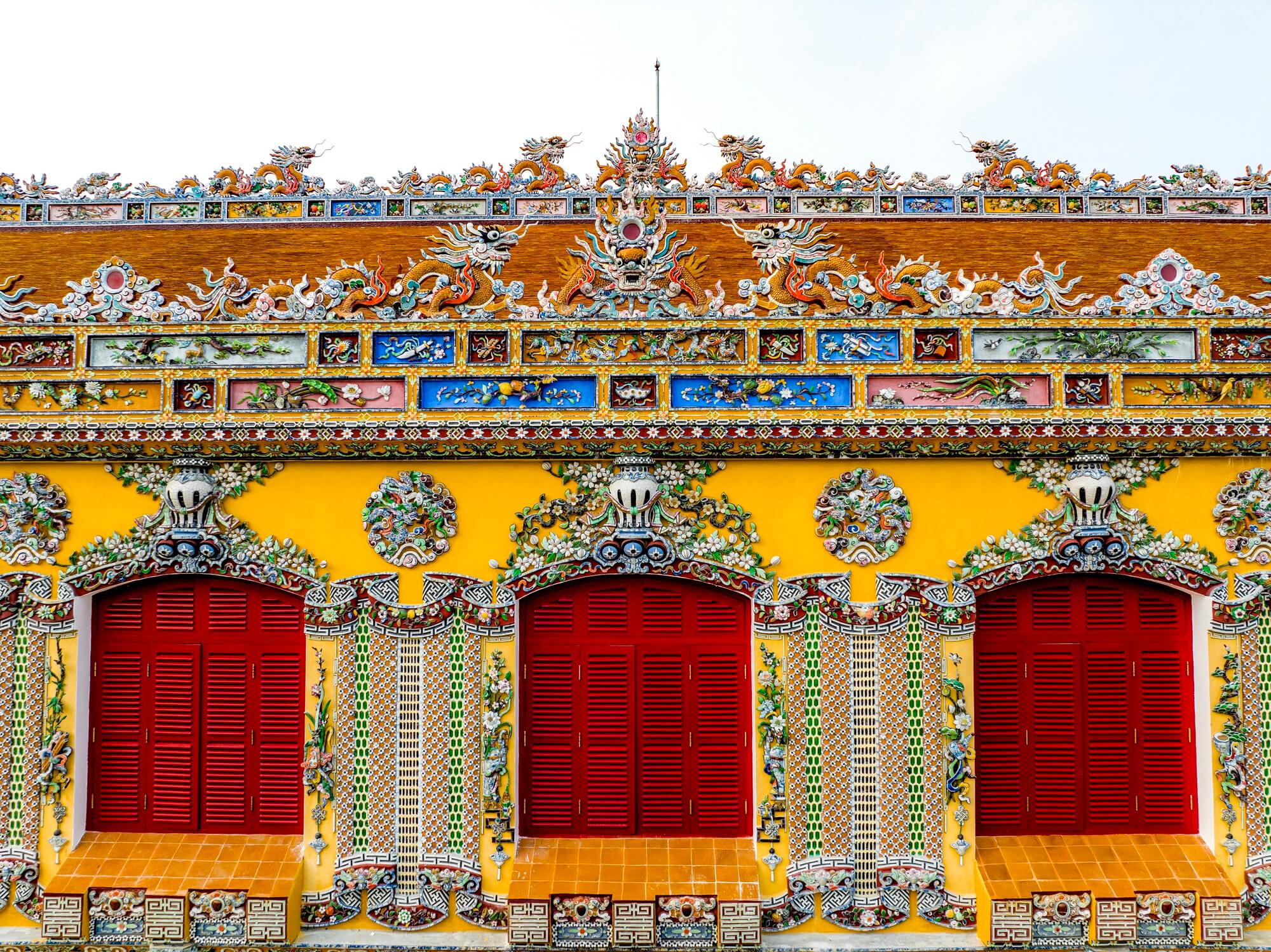
3.1. Facade: Where East-West architecture meets the art of vibrant ceramic mosaics.
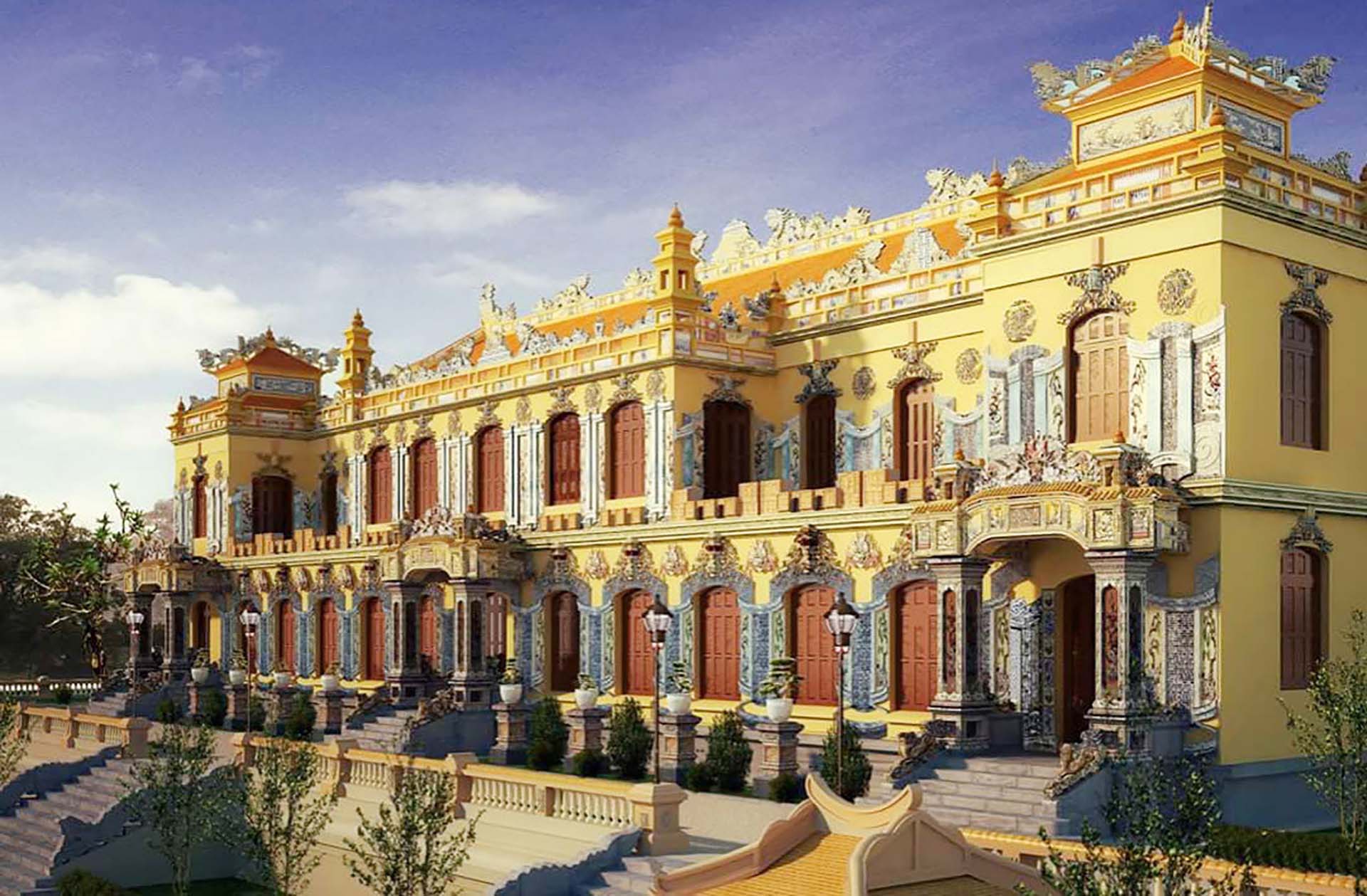
The facade of Dien Kien Trung in Hue clearly reflects a blend of classical Eastern and European Neoclassical styles. The walls have been restored with vibrant ceramic mosaic art, perfectly recreating the beauty of the ancient royal palace. The vibrant ceramic mosaic patterns combine with the system of columns, balconies, and arched doors to create an elegant yet majestic beauty. This is the result of the restoration of the Kien Trung Palace after decades of being in ruins.
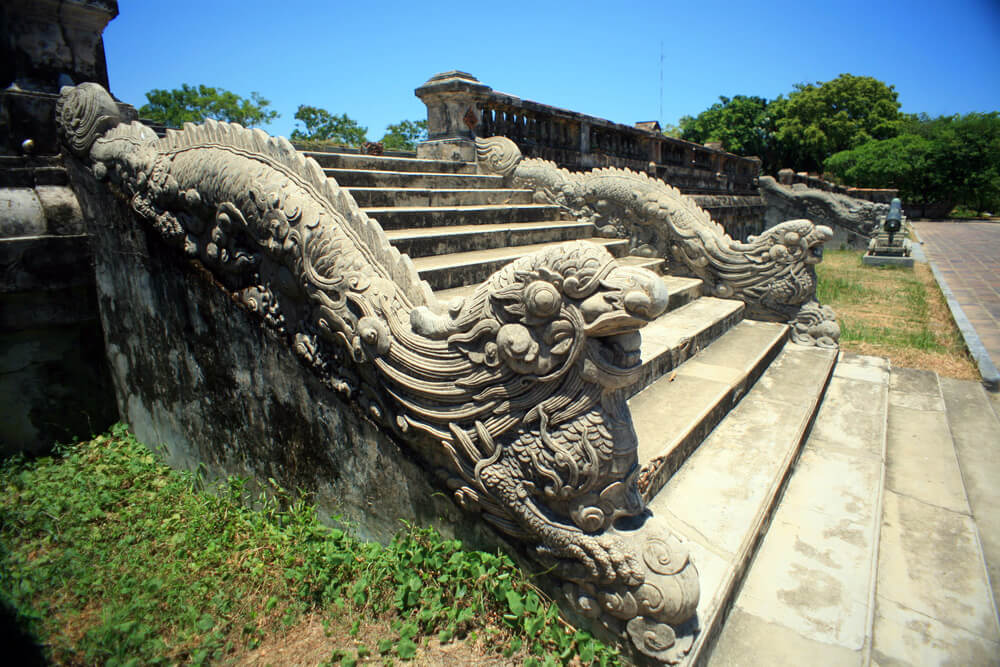
3.2. Dragon Staircase: A symbol of authority and a signature photo spot.
The Dragon Staircase is a distinctive architectural feature that was carefully restored during the 2019 renovation project of Kien Trung Palace. The image of two dragons winding along the staircase, meticulously carved, symbolizes the supreme power of the royal dynasty. This is also one of the most iconic photo spots at the Kien Trung Palace in Hue's imperial city, embodying solemnity, history, and a sense of grandeur.
3.3. Interior: Admire the precious artifacts of the last two kings.
Inside the Kiến Trung Palace is a space recreating royal life with precious artifacts associated with the last two kings, Khải Định and Bảo Đại. Thanks to the process Restoration of the Kiến Trung PalaceVisitors can now admire many precious artifacts such as the golden throne, chandeliers, and portraits of the last two kings—Khai Dinh and Bao Dai. All of these contribute to highlighting the depth History of Dien Kien Trung.

3.4. Second-floor balcony: A million-dollar view overlooking the entire Forbidden City.
From the balcony on the second floor of the Kiến Trung Palace, visitors can enjoy a panoramic view of the Forbidden City and part of Imperial City of HueThe multi-story architecture has been Restoration of the Kiến Trung Palace True to the original, it retains its ancient charm while remaining safe and secure. This is one of the rare vantage points that allows you to appreciate the grandeur of the ancient capital from above. In the early morning or late afternoon sun, this balcony corner becomes a sought-after check-in spot thanks to its airy, ancient, and emotional atmosphere.
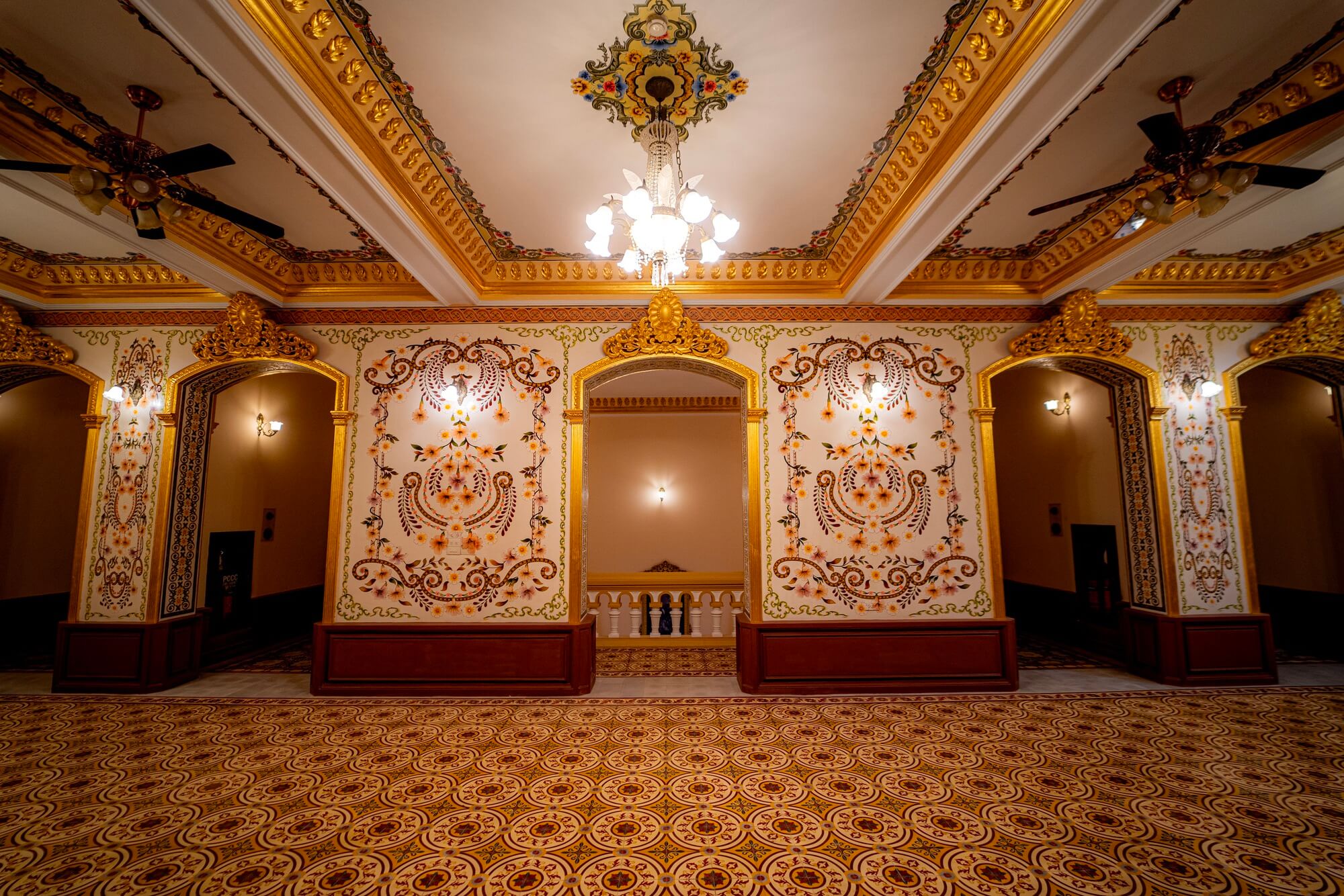
4. The fascinating historical story behind the most magnificent palace of the Nguyen dynasty
4.1. The palaces of the last two kings: King Khải Định and King Bảo Đại.
Kien Trung Palace was the residence and workplace of the last two emperors of the Nguyen dynasty – Emperor Khai Dinh and Emperor Bao Dai. During Khai Dinh's reign, this building was constructed with the desire to express the cultural fusion between East and West, reflecting innovative thinking in a context where the country was undergoing many changes. Later, King Bảo Đại continued to use this place as the center of government administration and as the daily living space for the royal family.
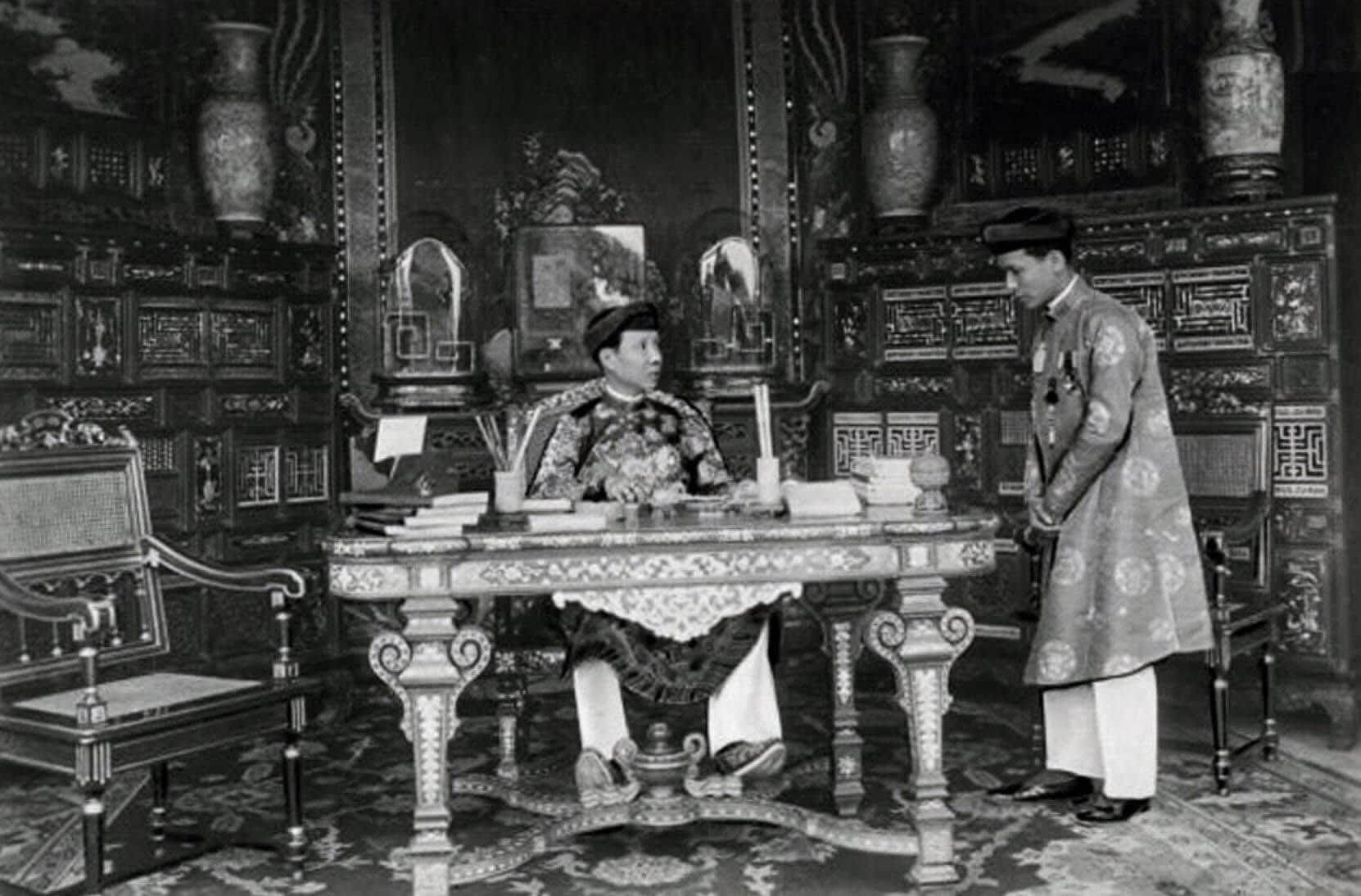
4.2. The site of a major historical event: Emperor Bao Dai convened a meeting to discuss his abdication.
Few people know that it was at Dien Kien Trung Palace that Emperor Bao Dai held an important meeting with his court officials before deciding to abdicate in 1945. This event not only brought an end to the Nguyen dynasty after more than 140 years of rule but also ushered in a new era in modern Vietnamese history. The quiet, ancient space of the palace today still seems to echo with the resonance of that historic moment.
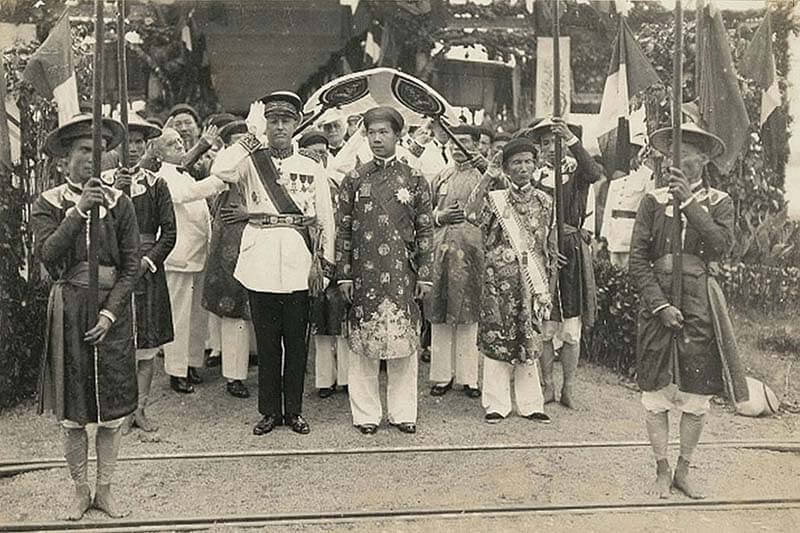
4.3. The miraculous journey of revival after more than 70 years of being reduced to ruins.
After 1945, the Kiến Trung Palace underwent a long period of severe damage due to war and weather, eventually becoming nothing more than ruins. It was not until 2019 that the restoration project for the Kiến Trung Palace was officially launched by the Hue Monuments Conservation Center. The restoration work on the Kiến Trung Palace was carried out systematically, based on original drawings, archival images, and traditional restoration techniques.
Every architectural detail, color, and ceramic mosaic pattern has been meticulously recreated, giving a vibrant and lively appearance to a historical symbol that had been forgotten.
5. Visiting Hue to explore Kien Trung Palace? Choose Queen Cafe Bus sleeper buses for a complete journey.
5.1. Why choose a sleeper bus for your trip to Hue?
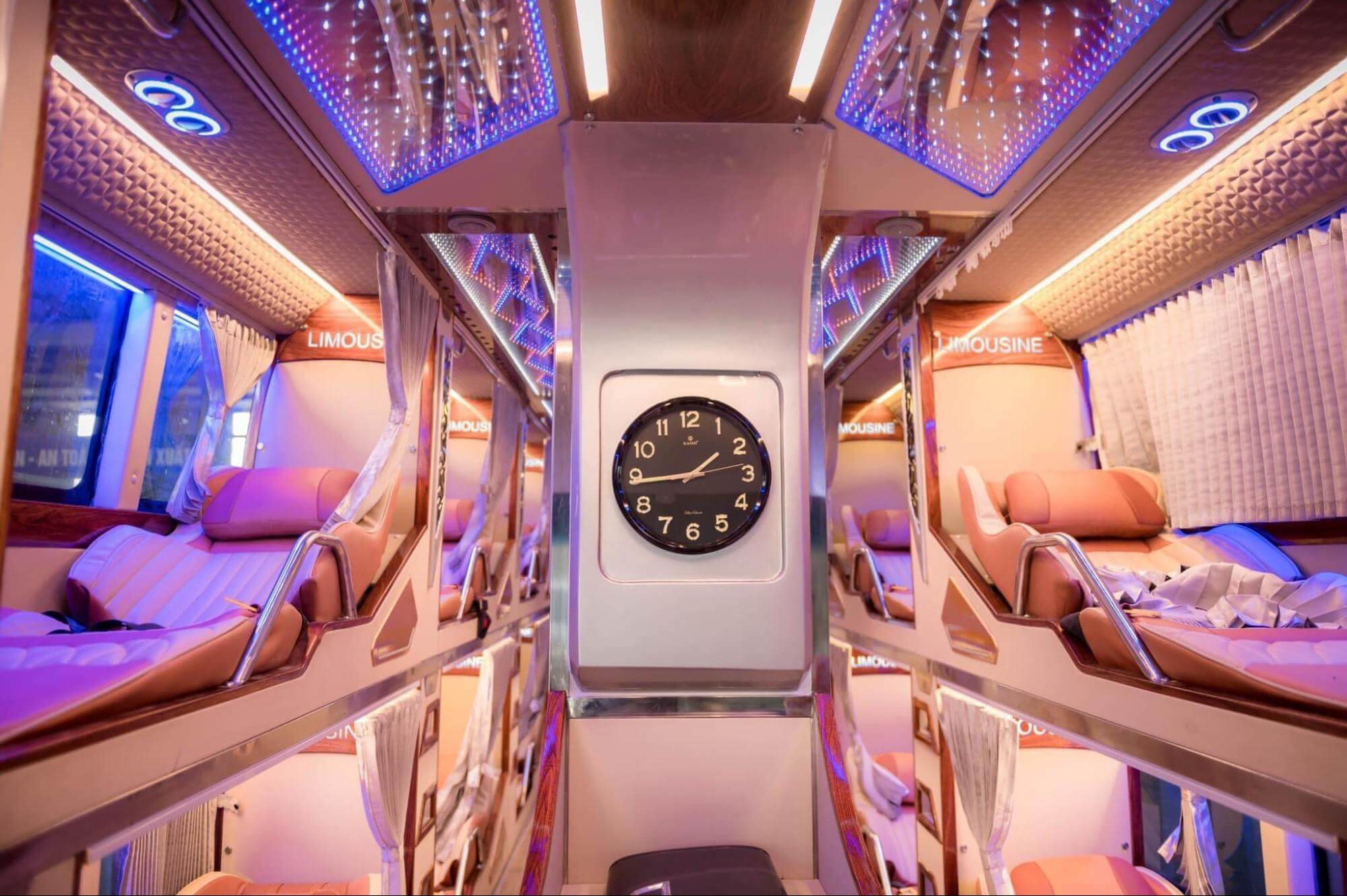
With a long distance, Queen Cafe Bus sleeper bus is the optimal choice: comfortable, clean, reasonably priced, and flexible pick-up/drop-off. In particular, the bus offers night trips so you can sleep and arrive in Hue early in the morning.
Check out our price list for popular routes to Hue:
| BUS ROUTE TO HUẾ | PRICE | BOOK TICKETS |
| Hanoi ⇔ Hue | 350.000 VNĐ – 550.000 VNĐ | Place it here |
| Da Nang ⇔ Hue | 150.000 VND/pax | Place it here |
| Hoi An ⇔ Hue | 150.000 VND/pax | Place it here |
| Ninh Binh ⇔ Hue | 350.000 VNĐ – 500.000 VNĐ | Place it here |
| Quang Binh ⇔ Hue | 180,000 VND | Place it here |
5.3. Instructions for booking Queen Cafe Bus sleeper tickets.
Queen Cafe Bus offers the following online booking methods:
- Hotline: (+84) 906 746 884 – (+84) 914 215 809
- Zalo / WhatsApp: (+84) 905 746 884 – (+84) 914 215 809
- Book tickets/get support via the official Fanpage: Queen Cafe Open Bus
- Book at Website: queenbus.com.vn
- Book via Email: queenbusexpress@gmail.com
6. Final words
The Dien Kien Trung Palace in Hue Citadel is not only a prominent attraction in the heart of Hue's Imperial City but also a place that preserves many important historical landmarks and unique architectural influences from both Asia and Europe. Whether you are a culture lover, photography enthusiast, or simply want to experience the ancient beauty of the former capital, this place will surely offer a worthwhile experience.
Don't forget to plan your trip wisely and book your tickets early with reputable bus companies such as Queen Cafe Bus For a comfortable, convenient, and safe journey. Hue awaits you with all its gentleness, tranquility, and antiquity that cannot be found anywhere else.
Frequently Asked Questions
After being destroyed in 1947, the palace was meticulously restored and officially reopened to visitors in early 2024.
Entrance fees for the Imperial City (updated for 2024–2025):
* Adults: 200,000 VND per person.
* Children (aged 7–12 or under 1.3m tall): 40,000 VND per person.
* Children under 6 years old: Free of charge.