


Tu Duc Tomb, one of the most typical and poetic mausoleums of the Nguyen Dynasty in the ancient capital of Hue, is hidden amidst the majestic beauty of rolling mountains. Not only bearing the historical mark as the resting place of a king with a poet's soul, Tu Duc Tomb also promises to be a destination that brings countless unique experiences for tourists. Let's explore the history, unique architecture, ticket prices, opening hours, and the biggest mystery about King Tu Duc's resting place with Queen Cafe Bus.
1. Tu Duc Tomb Hue Travel Guide for Tourists
1.1 Where is Tu Duc Tomb? Directions and Detailed Map
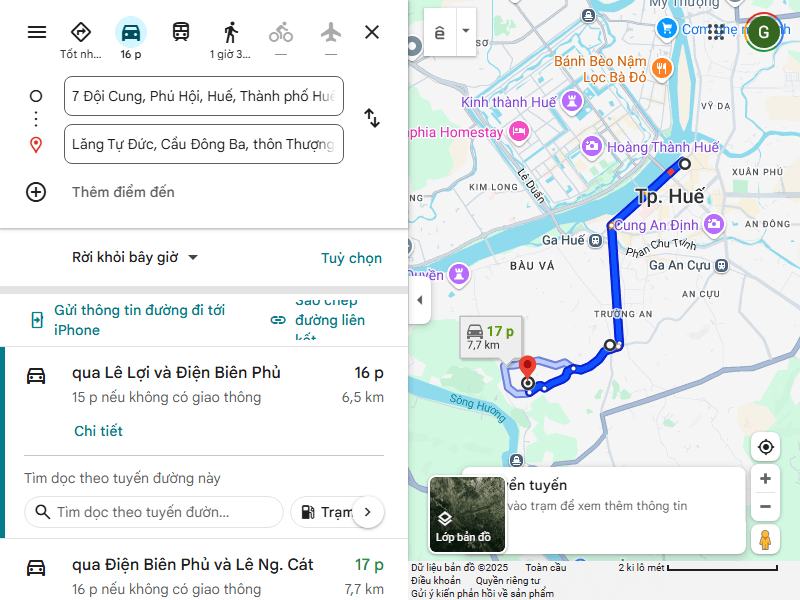
Tu Duc Tomb is located at Dong Ba Bridge, Thuong Village, Hue City, about 6km from the center. To reach this monument complex, you can choose the following means of transportation:
- Motorbike:This is a great choice for you to be proactive with your time and fully feel the atmosphere of Hue. If departing from 7 Doi Cung, the center of Hue City, you can go along Le Loi Street, turn onto Dien Bien Phu Street, enter Le Ngo Cat Street, and then go straight a bit further to reach the tomb gate area. You can park your car in the parking area and walk inside to visit!
- Taxi/GrabSuitable if you are traveling with family or a group of friends. A convenient ride will help everyone conserve their health, especially when traveling with the elderly and young children.
1.2 Convenient Travel to Hue with Queen Cafe Sleeper Bus
For those departing from Hanoi, Da Nang, or Hoi An, Queen Cafe Bus is a refined choice to start your journey to Hue. The comfortable limousine buses featuring private cabins will bring you moments of relaxation on the road. A special point is that the bus takes you straight to the center of Hue at No. 7 Doi Cung, very close to Trang Tien Bridge, helping you easily check into your hotel and start your trip with a relaxed and calm mindset.
To help you easily plan and budget for your trip, below is a reference price list for Queen Cafe Bus's main routes to Hue:
| BUS ROUTE TO HUẾ | PRICE | BOOK TICKETS |
| Hanoi ⇔ Hue | 350.000 VNĐ – 550.000 VNĐ | Place it here |
| Da Nang ⇔ Hue | 150.000 VND/pax | Place it here |
| Hoi An ⇔ Hue | 150.000 VND/pax | Place it here |
| Ninh Binh ⇔ Hue | 350.000 VNĐ – 500.000 VNĐ | Place it here |
| Quang Binh ⇔ Hue | 180,000 VND | Place it here |
📞 For attentive consultation and the fastest ticket booking, you can contact:
- Hotline: 0906.413.468 – 0914.215.809
- Zalo: 0905.746.884 – 0914.215.809
- Website: https://queenbus.com.vn/
- Fanpage: Queen Cafe Open Bus
1.3 Latest Updates on Tu Duc Tomb Ticket Prices and Opening Hours
After learning a bit about Tu Duc Tomb, the opening hours and ticket prices are certainly what many tourists care about. Below is the latest updated information for 2025:
Tu Duc Tomb Ticket Prices:
- Adults: 150,000 VND/person.
- Children: 20,000 VND/child.
Tu Duc Tomb Opening Hours:
- Summer: 6:30 AM – 5:00 PM
- Winter: 7:00 AM – 5:00 PM
1.4 When is the Ideal Time to Visit Tu Duc Tomb?
The most ideal time for tourists to visit this Hue tourist destinations is from March to August every year. Because the weather conditions in Hue during this period are usually beautifully sunny, with little rain, and the air is cool and pleasant, making it very favorable for exploring and admiring the poetic landscape within the campus of King Tu Duc's Tomb.
2. History of King Tu Duc's Tomb: From Van Nien Co to Khiem Lang
2.1 When was Tu Duc Tomb Built and How Long Did it Take?
Dubbed the most beautiful architectural work of the Nguyen Dynasty, Tu Duc Tomb is not only a mausoleum but also the eternal resting place of King Tu Duc – the fourth and longest-reigning king among the 13 kings of the Nguyen Dynasty (from 1847 to 1883).
Ruling the country in a historical context full of difficulties, with foreign invaders constantly attacking and internal royal family conflicts, King Tu Duc seemed to have found a way to escape the harshness of life by building this mausoleum complex as a "second palace" for himself. It was a place where he could live, work, recite poetry, and relax even while he was still alive.
So, when was Tu Duc Tomb built and how long did this process take? This massive project was commenced in 1864, mobilizing over 50,000 soldiers and workers who labored strenuously. After nearly 9 years of diligent construction, by 1873, the entire mausoleum complex was basically completed, ready for the final years of the king's life.
2.2 The Chay Voi Rebellion Tragedy and the King's Feelings Behind the Word "Khiem"
When it was first started, Tu Duc Tomb was named "Van Nien Co," meaning a "ten-thousand-year foundation." However, the construction process placed an immense burden on the shoulders of soldiers and citizens, with extremely harsh working conditions and severe exploitation. This ignited a major uprising among the soldier-workers, known as the "Chay Voi Rebellion" (Pestle Rebellion), demonstrating the profound dissatisfaction of the people. Although the rebellion was suppressed and its leaders executed, this tragedy deeply affected the king's mind and feelings.
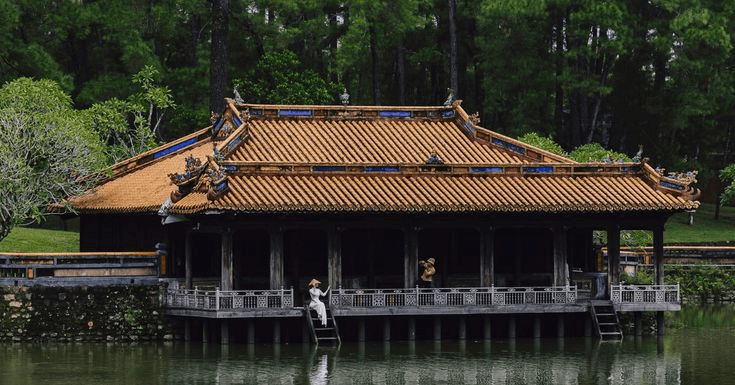
After that painful event, King Tu Duc decided to change the tomb's name from Van Nien Co to "Khiem Cung" (Modest Palace). And after the king passed away, it was officially renamed Khiem Lang (Modest Tomb). The word "Khiem" (modest, humble) not only shows the king's repentance and torment in the face of historical upheavals but also serves as an autobiography of his tragic life and deep thoughts. These inner feelings are an important part of what makes Tu Duc Tomb unique and attracts tourists to learn about it.
To date, Tu Duc Tomb is not only considered one of the 7 most beautiful mausoleums on the Hue tourism map but was also honored to be recognized by UNESCO as a World Cultural Heritage in 1993. Notably, Tu Duc Tomb is one of the first historical monuments in Vietnam to be featured in the 3D digitized museum under the Google Arts & Culture project, allowing tourists from all over the world to admire its beauty through modern technology.
3. Exploring Tu Duc Tomb Architecture: A Masterpiece "Poem" from Stone and Nature
3.1 Overall Layout: How Large is Tu Duc Tomb and the Hidden Feng Shui Philosophy?
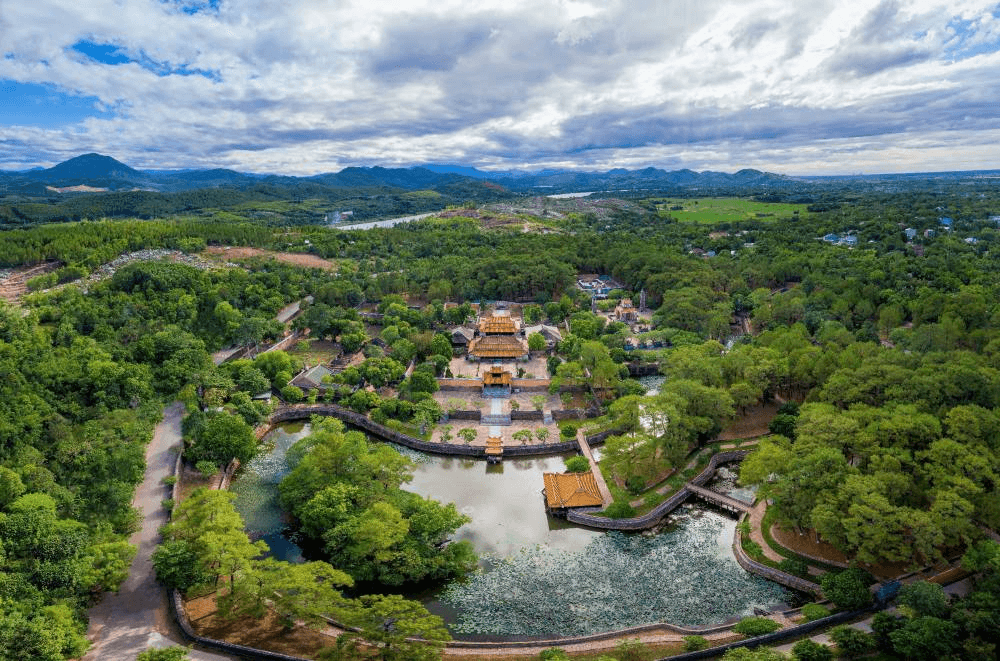
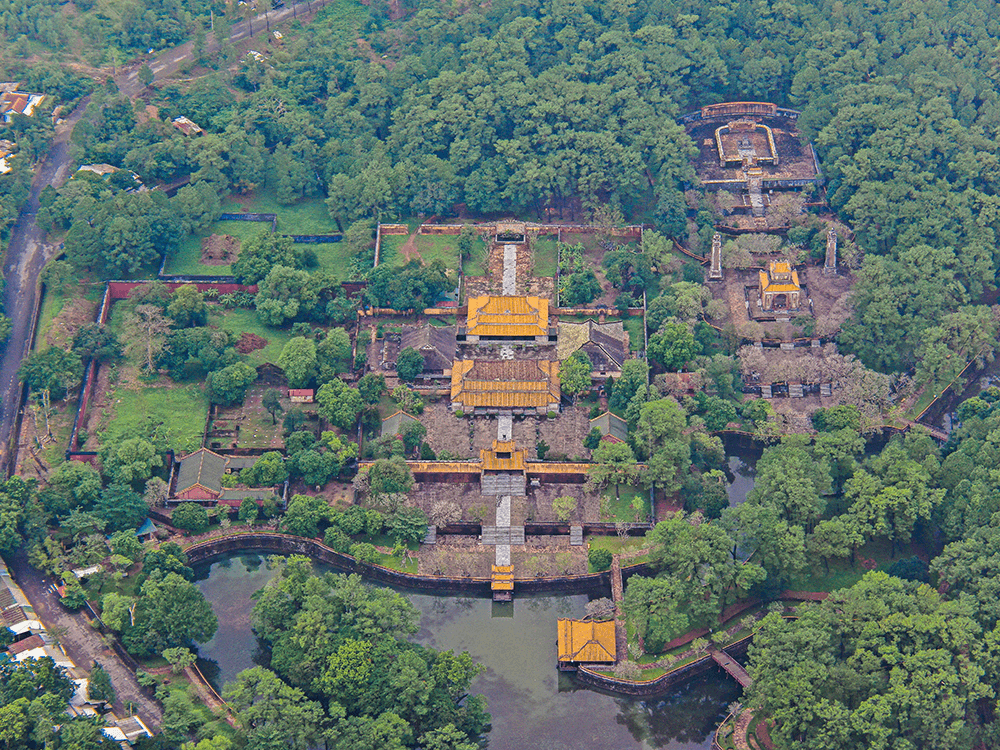
Tu Duc Tomb has a total area of nearly 12 hectares (or 120,000 m²), comprising nearly 50 large and small structures arranged harmoniously within a poetic natural setting. The entire mausoleum complex is divided into two main areas:
- Tam Dien Area (The Palace): The administrative area where the king lived, worked, and entertained while alive.
- Lang Mo Area (The Tomb): The burial area for the king's remains.
Particularly, all structures within King Tu Duc's Tomb bear the word "Khiem" in their names, a word signifying respect and humility, reflecting one of the virtues highly valued by Confucian scholars of the time. The architecture of Tu Duc Tomb strictly adheres to traditional feng shui principles, with the harmony of every curving line. There are no perfectly straight roads; instead, there are winding paths blending into nature. Everything creates a vivid overall "poem" constructed from stone, wood, and trees, with Giang Khiem Mountain as the front screen (tiền án), Duong Xuan Mountain as the backrest (hậu chẩm), and Luu Khiem Lake serving as the "minh đường" (bright hall) element.
3.2 Strolling in the Tam Dien Area – The King's "Second Palace"
The Tam Dien area is the heart of the Tu Duc Tomb complex, where King Tu Duc spent most of his time resting, entertaining, writing poetry, and receiving courtiers. The structures here are exquisitely built and bear the king's deep personal imprint, showcasing his meticulousness and artistic soul.
3.2.1 Luu Khiem Lake, Xung Khiem Pavilion, and Du Khiem Pavilion
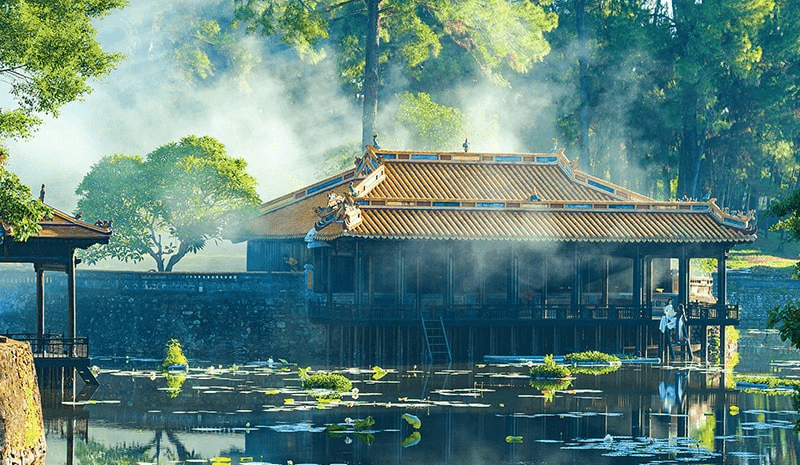
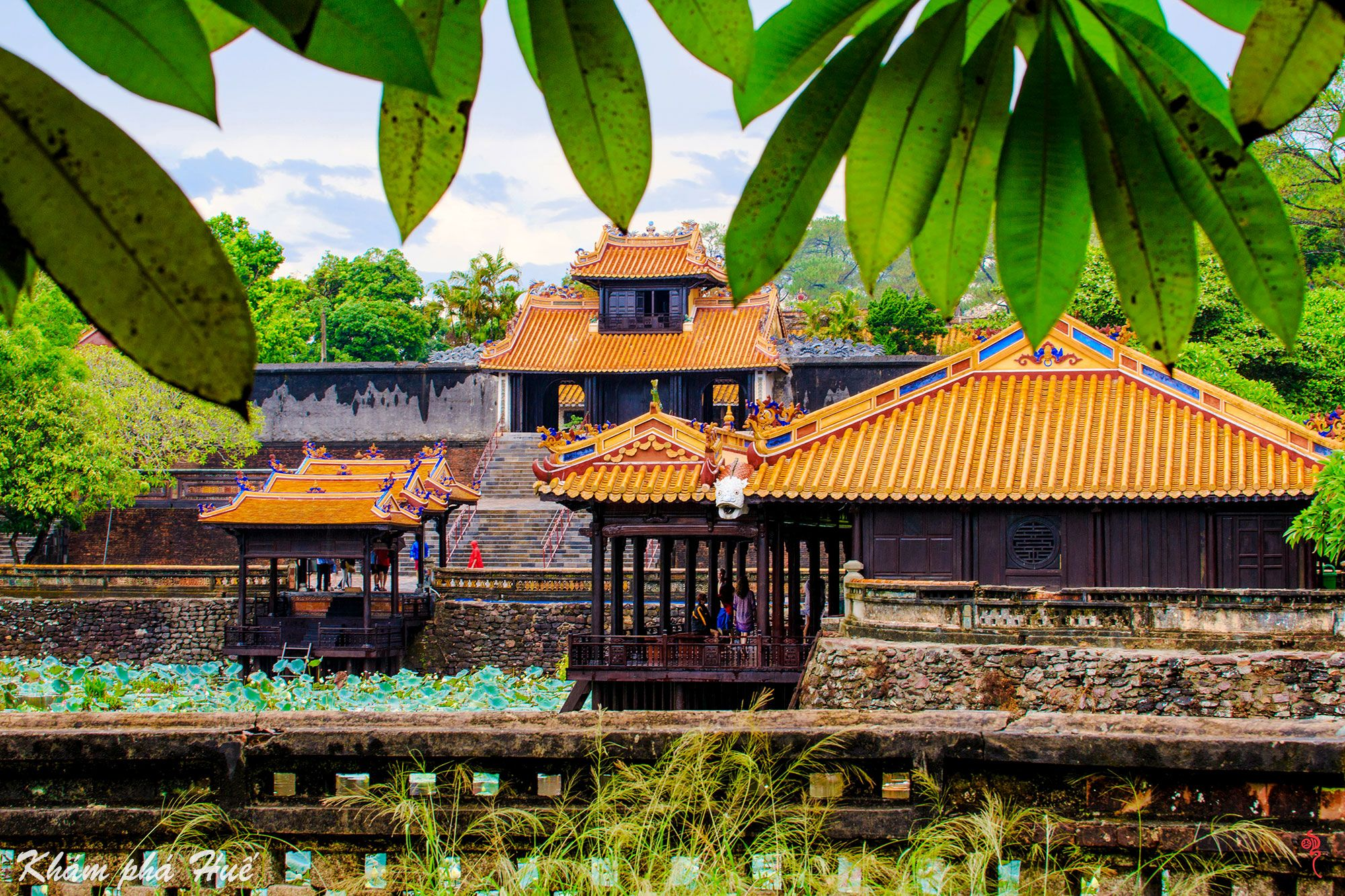
Stepping into the Tam Dien area, visitors will immediately be captivated by Luu Khiem Lake – a large, clear blue lake, originally a small stream flowing through the tomb area that was dug into a lake. On the surface of the lake, two uniquely designed pavilions, Xung Khiem Ta and Du Khiem Ta, were erected, creating a poetic, crystal-clear, and deeply romantic scenery.
This is where King Tu Duc often sat to enjoy the view, write poetry, read books, and organize artistic performances within Tu Duc Tomb Hue, enjoying rare moments of relaxation. In the middle of the lake is Tinh Khiem Island, used for planting flowers and keeping some rare animal species.
3.2.2 Khiem Cung Mon (Khiem Cung Gate)
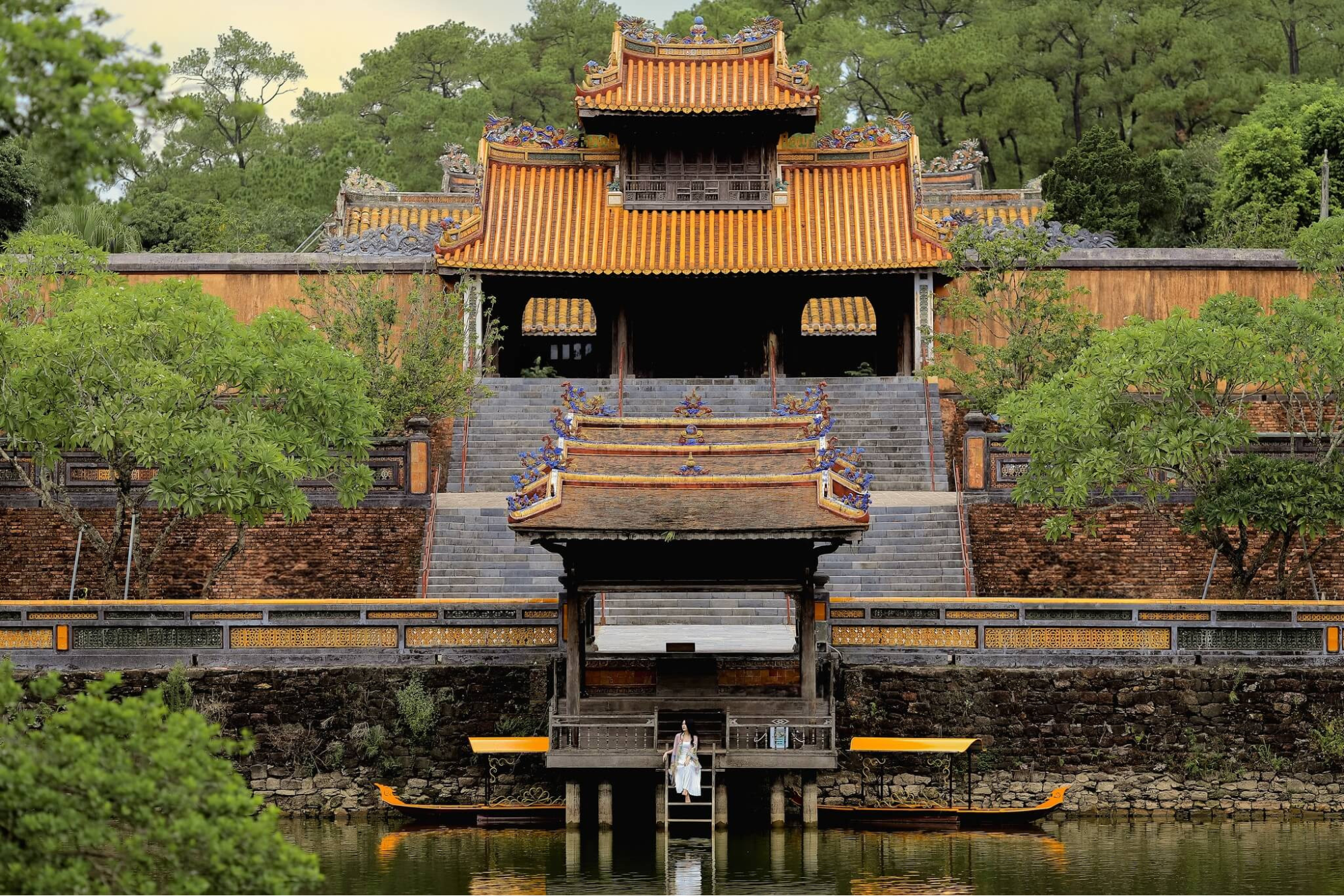
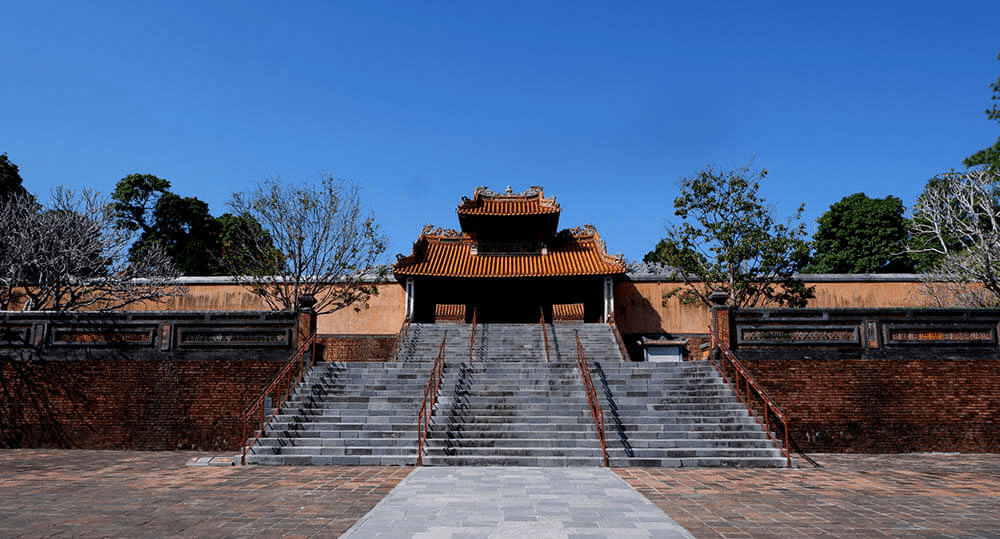
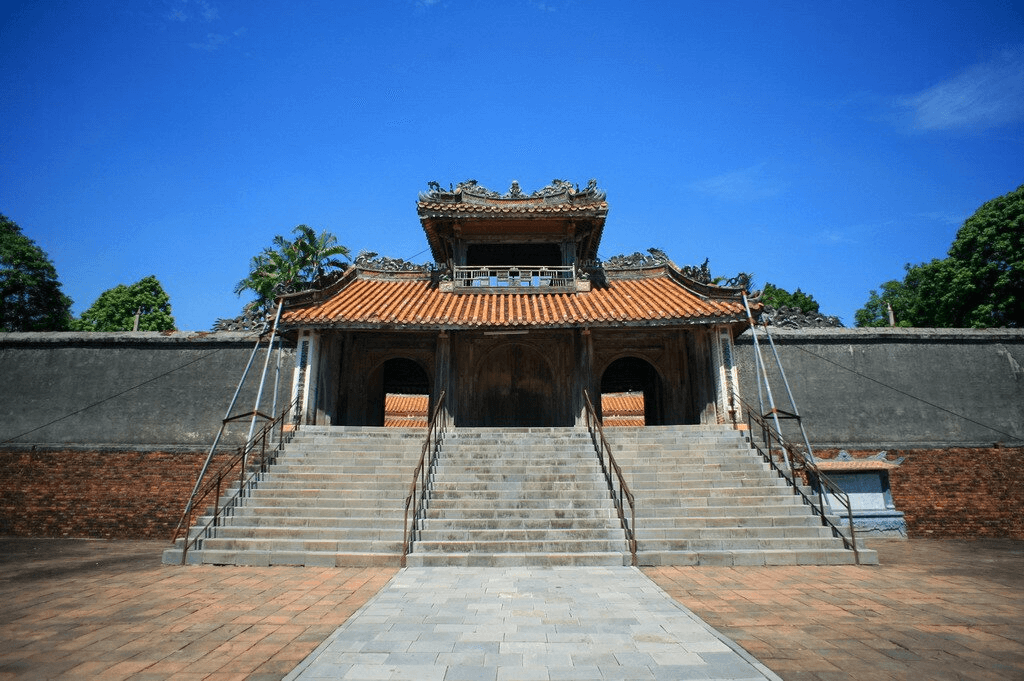
Serving as the main gate leading into the palace area (Tam Dien) of King Tu Duc's Tomb, Khiem Cung Mon is designed as a two-story watchtower structure. With intricate and meticulous carvings, this gate not only displays majesty but also heavily features the characteristic royal architecture of the Nguyen Dynasty, leading the way into the king's private space.
3.2.3 Hoa Khiem Palace
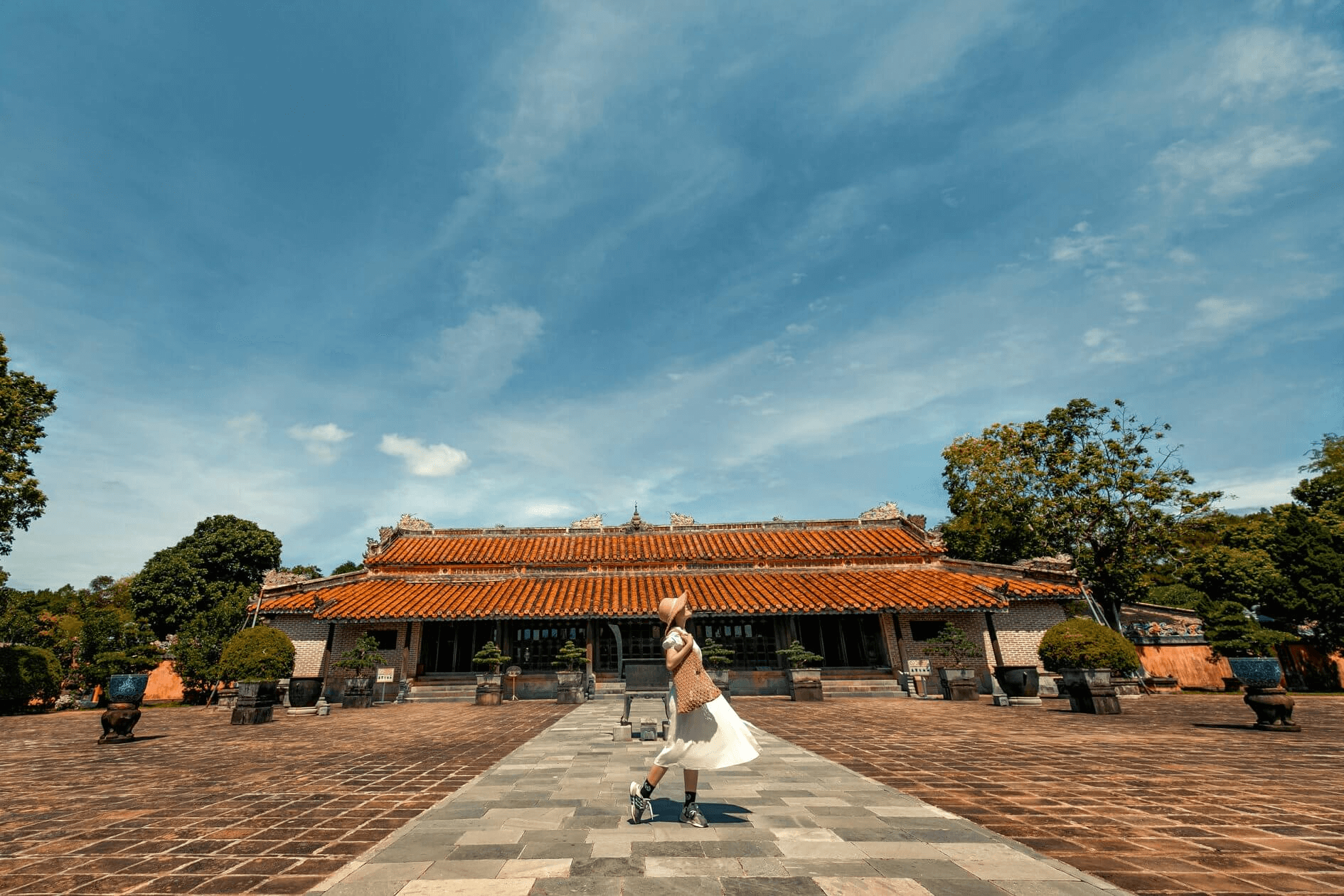
Located right behind Khiem Cung Mon, Hoa Khiem Palace is the main structure in the Tam Dien area. This was where King Tu Duc worked, handled court affairs, and received courtiers. After the king passed away, Hoa Khiem Palace became the place of worship for the tablets of the king and queen, continuing to hold a central role in the mausoleum complex.
3.2.4 Minh Khiem Theater
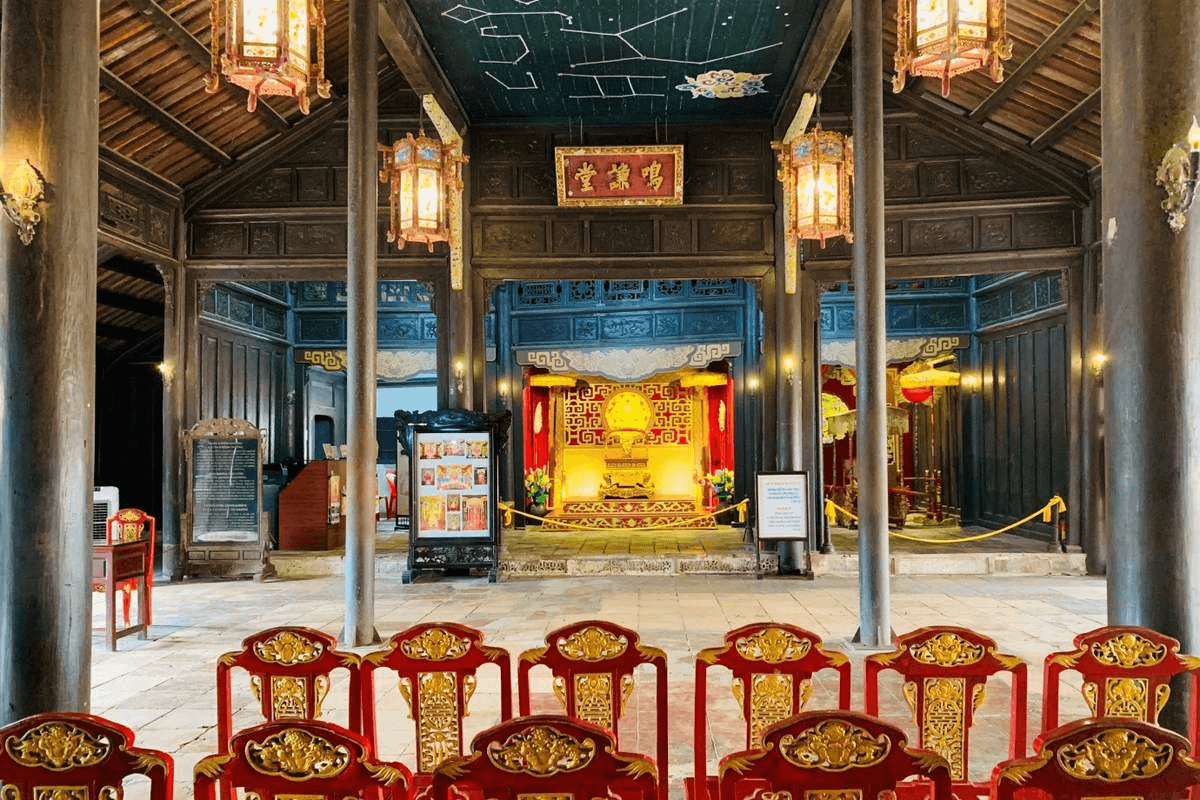
Located to the left of Luong Khiem Palace (the building behind Hoa Khiem Palace and currently the place of worship for the spirit of Tu Du - King Tu Duc's mother), Minh Khiem Theater (or Minh Khiem Duong) is the area the king often frequented to enjoy Tuong (classical drama) performances, demonstrating his deep passion for the arts. Today, this location is considered one of the oldest royal theaters in Vietnam still existing relatively intact, and it is also a place deeply imprinted with the cultural and artistic marks of the Nguyen Dynasty era.
3.3 Entering the Tomb Area – The Resting Space and Self-Narratives
The Tomb Area is the resting place of King Tu Duc, designed solemnly and in harmony with nature.
3.3.1 Bai Dinh (Courtyard of Mandarin Statues)
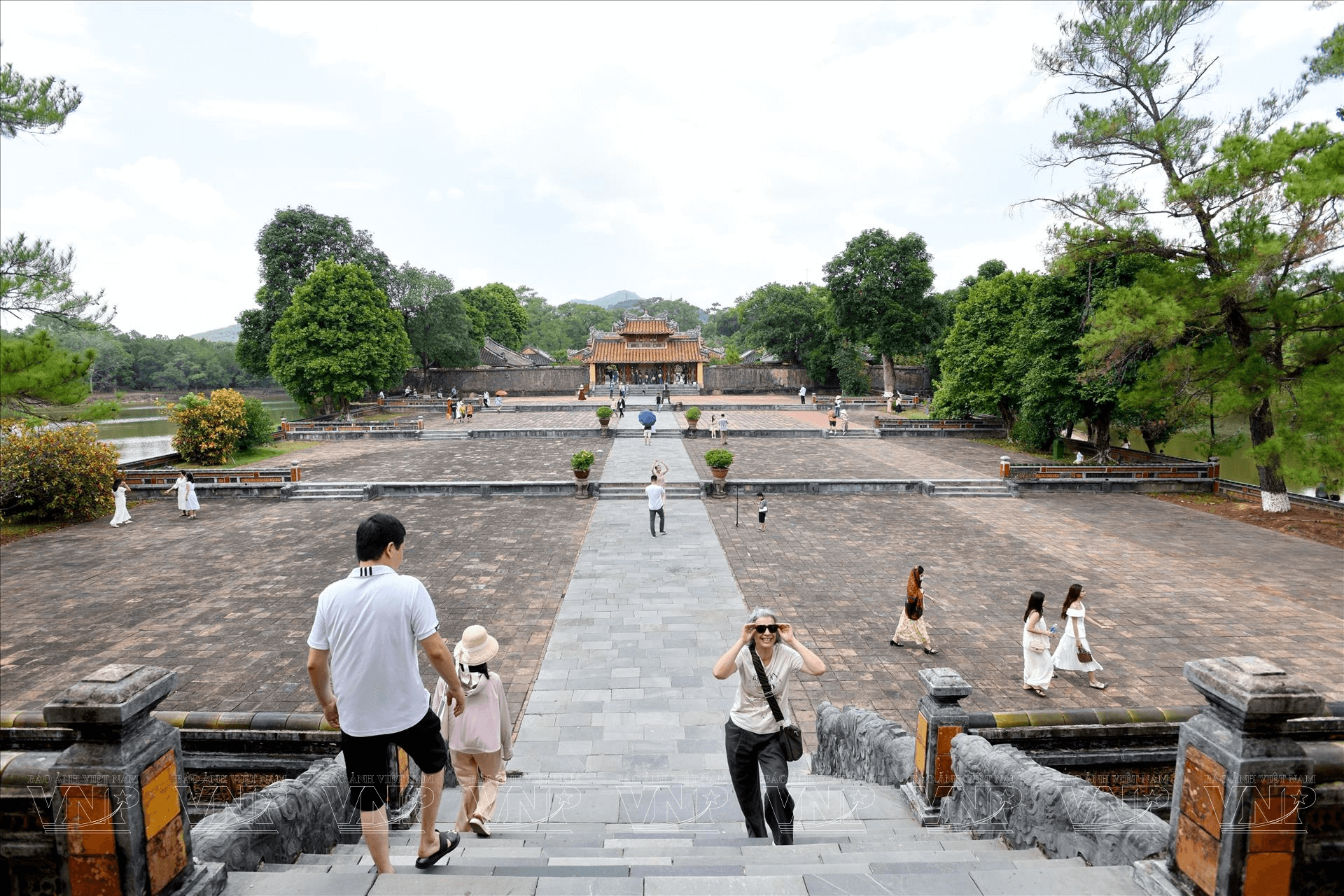
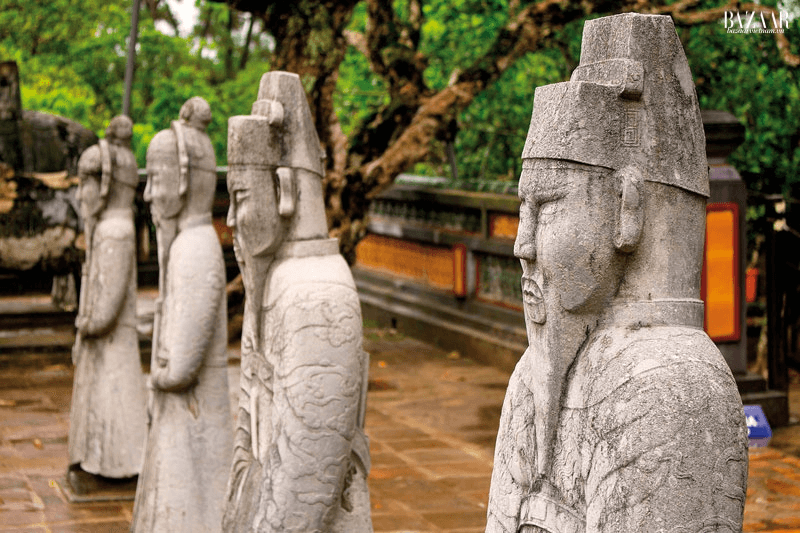
After passing through the palace area, visitors will set foot in the Bai Dinh courtyard, an open space revealing a solemn scene with two rows of majestic stone statues of civil and military mandarins, along with stone statues of elephants and horses standing imposingly and bravely. These statues symbolize serving the king in the afterlife, recreating a part of the royal court atmosphere.
3.3.2 Bi Dinh and Khiem Cung Ky Stele
At the end of the Bai Dinh courtyard is Bi Dinh (stele pavilion), housing a massive stone stele made from Thanh Hoa stone, weighing over 20 tons. Engraved on this stele is the essay "Khiem Cung Ky" drafted by King Tu Duc himself. This is a special autobiographical text, taking the place of the "Thanh duc than cong" (Divine Virtue and Holy Feats) essay typically found in other tombs, because King Tu Duc had no heir to write his epitaph.
![[Ch nén] Bia đá Khiêm Cung Ký Lăng Tự Đức (Ảnh Sưu tầm)](https://queenbus.com.vn/wp-content/uploads/2025/07/Ch-nen-Bia-da-Khiem-Cung-Ky-Lang-Tu-Duc-Anh_-Suu-tam.png "[Ch nén] Bia đá Khiêm Cung Ký Lăng Tự Đức (Ảnh Sưu tầm)")
3.3.3 Buu Thanh of Tu Duc Tomb
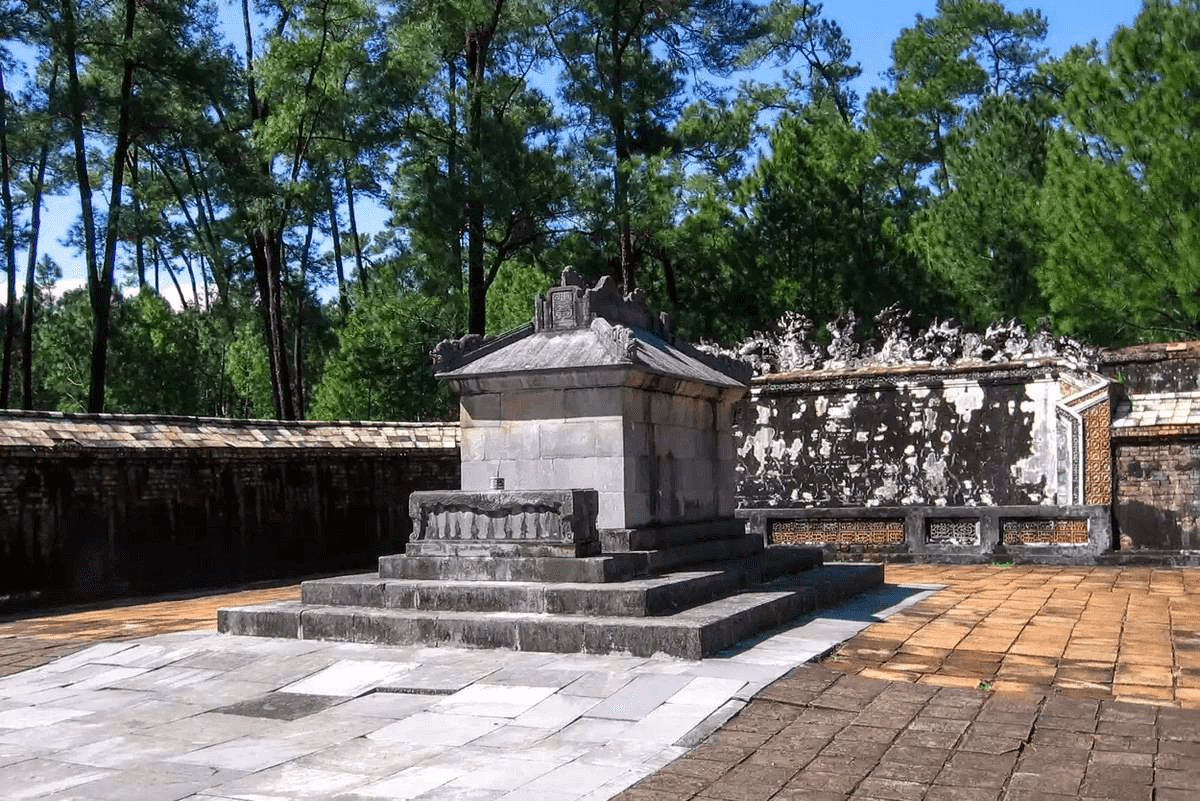
Behind Bi Dinh is Buu Thanh, the main tomb area where King Tu Duc is supposedly buried. Buu Thanh of Tu Duc Tomb is structured with two layers of brick walls surrounding the grave, with a large protective screen in front of the door and an inner wall creating the Huyen Cung (Mysterious Palace) area. Nestled amidst a cool green pine forest, with winding rivers and lakes surrounding it, the Buu Thanh area creates a peaceful and tranquil space, true to the poet's soul and the king's desire to merge with nature.

Best Hostels & Hotels in Hue City
Find the perfect hostel with top ratings on Hostelworld. Secure your bed today with zero booking fees!
4. Deciphering the Most Shocking Mysteries of Tu Duc Tomb in the Nguyen Dynasty
4.1 The Biggest Mystery: Where is King Tu Duc's Body Really Located? [Historical Truth]
One of the biggest and most shocking mysteries of Tu Duc Tomb and the Nguyen Dynasty is the true location of King Tu Duc's remains. Although the tomb area was elaborately built, according to history and many oral legends, the king's body is not buried at Buu Thanh but at another secret location.
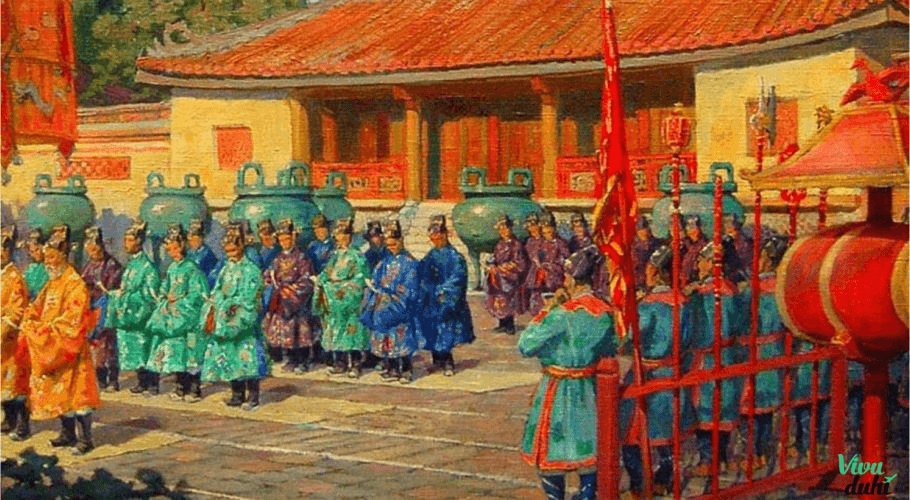
To keep this secret absolute, legend has it that 200 soldiers and craftsmen involved in the burial of King Tu Duc's body were beheaded immediately after completing their task. To this day, the true location of the king's grave remains a great unknown, creating special curiosity and attraction for tourists and history lovers when exploring King Tu Duc's Tomb.
4.2 Mysterious Legends and Anecdotes Around the Tomb
Tu Duc Tomb is not only an architectural masterpiece but also stands out with the presence of many Buddha statues and spiritual symbols, clearly showing the strong influence of Buddhism on King Tu Duc's thoughts and life. What is special is that the Buddha statues at the tomb not only signify honoring Buddhism but also harbor inexplicable mysteries, arousing the curiosity of tourists and researchers.
In folklore and through the accounts of those who used to guard the tomb, there are many mysterious stories about these Buddha statues. Some say that in the dead of night, the statues sometimes emit strange lights, or seem to be able to move slightly at certain moments, creating a sacred and magical atmosphere.
These strange phenomena have been passed down by word of mouth through many generations, and are believed to be signs of a deep spiritual connection between King Tu Duc and metaphysical worlds. These legendary stories have contributed to increasing the sacredness and mystery of Tu Duc Tomb, transforming this place not just into a historical relic but also a fascinating spiritual destination.
4.3 The Secret of Boi Lang – King Kien Phuc's Tomb within the Khiem Lang Campus
In the vast campus of Tu Duc Tomb Hue, few people notice another tomb area hidden under the green pine canopy to the left of Khiem Lang; that is Boi Lang – the tomb of King Kien Phuc (real name Nguyen Phuc Ung Dang). Kien Phuc was King Tu Duc's adopted son and the 7th emperor of the Nguyen Dynasty. He ascended the throne at the age of 14 and reigned for only 8 months before passing away. Compared to other emperors' tombs, Boi Lang has a rather modest scale and no separate campus, so it is often overlooked by tourists when visiting Tu Duc Tomb.
5. Other "Pocket" Experiences When Visiting Tu Duc Tomb
5.1 Outfits and Necessary Items to Prepare
Before visiting King Tu Duc's Tomb, a solemn historical and cultural monument, tourists should pay attention to the luggage they need to prepare for a comfortable and appropriate trip:
- ClothingTourists should choose polite, modest clothing, showing respect for the spiritual space and historical relic. Outfits with gentle, elegant colors such as black, white, brown, and beige will perfectly suit the ancient architectural background here.
- Snacks and water:The tomb campus is very large, and you may have to walk quite a lot. Preparing snacks and water in advance will help you "recharge" in time during the visit, especially on hot sunny days.
- Sun protection items:Hue's weather can be quite intensely sunny, especially in summer. Sunscreen, a light jacket, a wide-brimmed hat or conical hat (nón lá), sunglasses, etc., are all necessary items to help tourists protect their bodies from the effects of sunlight.
- Maintain general hygiene:: Tu Duc Tomb is a long-standing and precious historical relic. Tourists need to have a high sense of awareness in protecting the landscape, not littering, not touching artifacts, not carving or drawing on structures, and complying with the regulations of the monument management board.
5.2 Suggestions for "Poetic" Check-in Photo Spots
Hue royal tombs in general and Tu Duc Tomb in particular often possess stunningly beautiful architecture, a harmonious blend of Vietnamese traditions and sometimes classical architectural influences. Therefore, these locations frequently become famous and beloved check-in spots for tourists. To get the most beautiful and unique "virtual living" photos, you can refer to some "poetic" photo angles at Tu Duc Tomb:
- Khiem Cung Mon: The ancient main gate, takes beautiful photos.
- Khiem Cung Ky Stele: The largest stone stele in Vietnam, where King Tu Duc wrote the epitaph for himself.
![[Ch nén] Tấm bia do chỉnh tay vua Tự Đức viết (Ảnh Sưu tầm)](https://queenbus.com.vn/wp-content/uploads/2025/07/Ch-nen-Tam-bia-do-chinh-tay-vua-Tu-Duc-viet-Anh_-Suu-tam.png "[Ch nén] Tấm bia do chỉnh tay vua Tự Đức viết (Ảnh Sưu tầm)")
- Tam Dien Area:Including Hieu Duc Mon and Sung An Palace, where there is exquisite architecture and a tranquil space, making you feel like wandering into an ancient palace.
- Luu Khiem Lake:With its poetic, crystal-clear, and romantic scenery, and Xung Khiem Ta and Du Khiem Ta reflecting on the water surface, this is an unmissable photo angle to capture the lyrical beauty of the tomb.
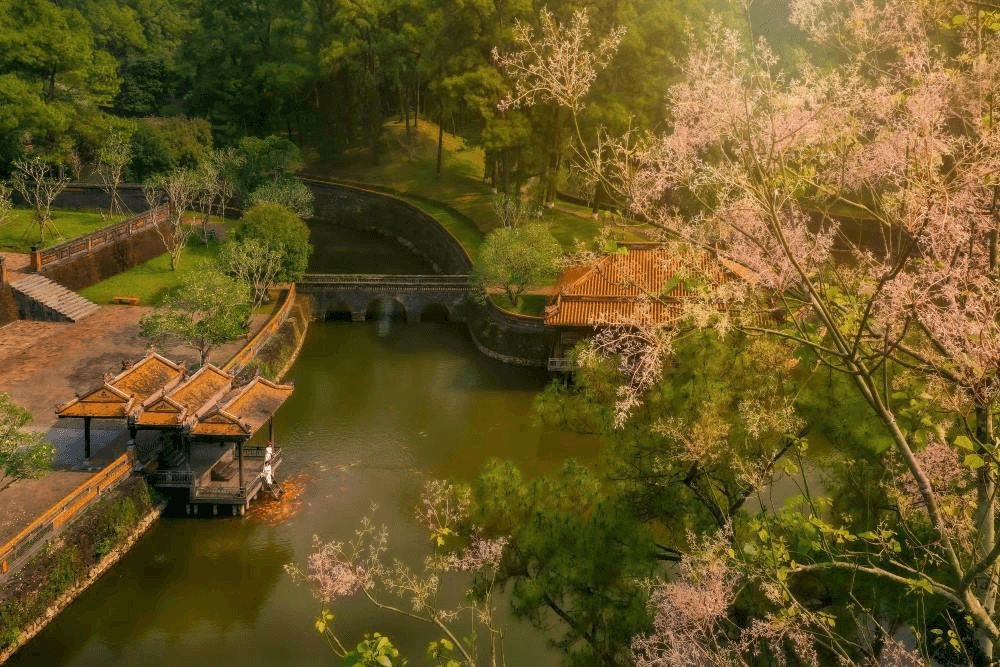
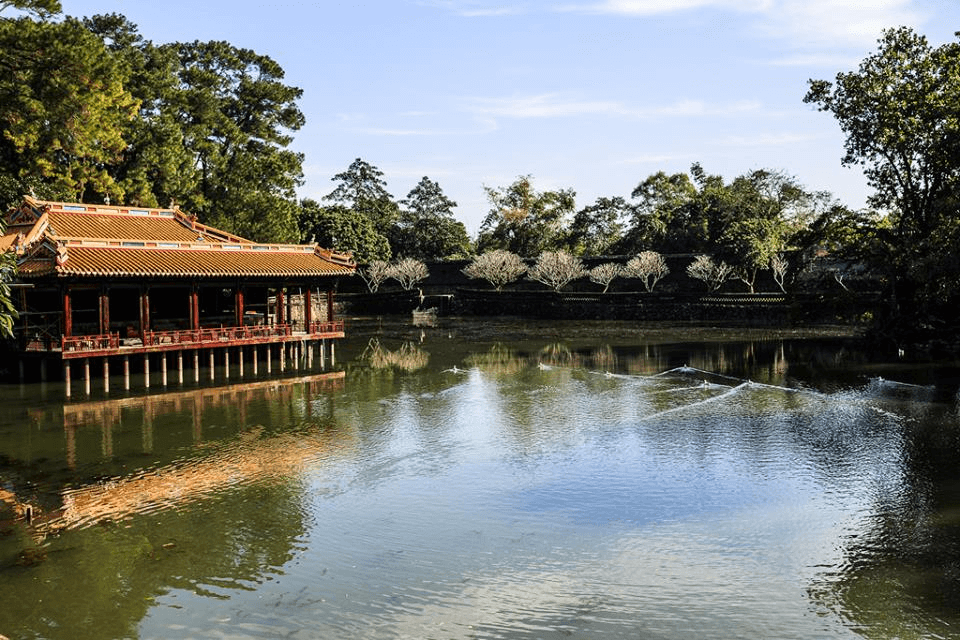
- Xung Khiem Ta: Where the king used to admire the scenery and write poetry, so this will be a super poetic corner and not to be missed by photography enthusiasts.
To get the most beautiful photos, tourists should choose hours with beautiful sunshine and fewer crowds (around noon or early afternoon). Especially, with a space imbued with history and culture, choosing historical costumes or ao dai with a conical hat will help you blend perfectly into the setting, creating unforgettable "distinctly Hue" photos. Always remember to follow the rules to protect cultural heritage while taking photos.
5.3 Nearby Tourist Attractions to Combine in the Itinerary
Around the Tu Duc Tomb area, there are many other attractive tourist destinations that visitors can easily combine in the same itinerary:
- Vong Canh Hill: Located very close to Tu Duc Tomb, Vong Canh Hill is a famous tourist spot with a stunning panoramic view. From here, tourists can admire the majestic natural scenery with the winding Perfume River, along with many other surrounding ancient architectural works like Minh Mang Tomb, Thien Mu Pagoda…

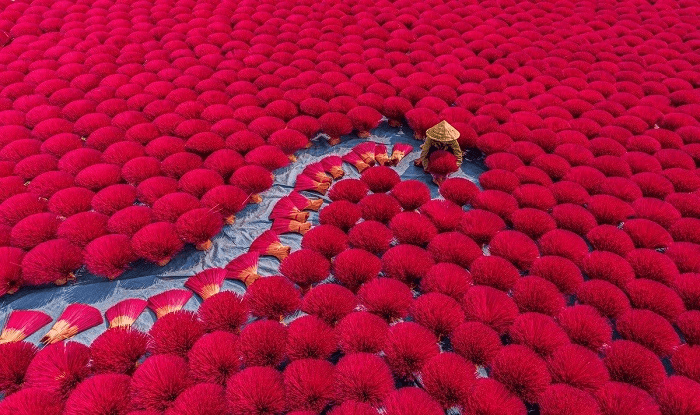
- Thuy Xuan Incense Village:: Not far from the tomb, this traditional craft village is an interesting destination to learn about Hue's traditional manual incense-making craft. You can take pictures with vibrantly colored bundles of incense and buy souvenirs.
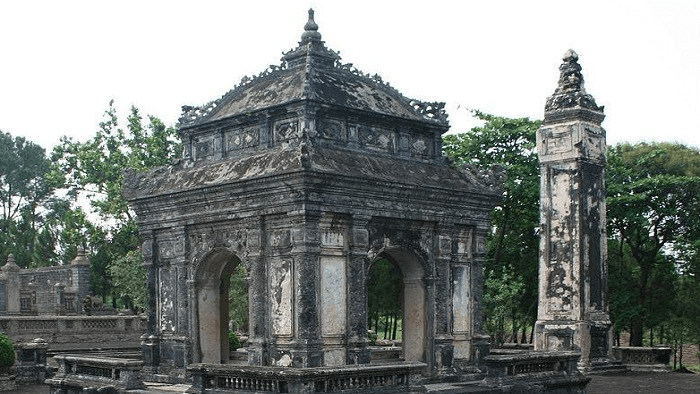
- Dong Khanh MausoleumSituated within the Nguyen Dynasty tomb system, Dong Khanh Tomb is the resting place of King Dong Khanh – the 9th king. This structure features a unique intersection of Asian and European architecture and is well worth exploring.
Final words
Transcending beyond a mere architectural work, Tu Duc Tomb is truly a masterpiece poem crafted from stone and nature. Here, the majesty of an emperor settles into a poetic, romantic space, inviting visitors to reflect on the life and feelings of a poet-king amidst turbulent times.
Hopefully, this journey through these historical scenes has left you with unforgettable emotions. And if your journey of discovery continues, Queen Cafe Bus is always ready to accompany you to write more memorable pages on every road.