


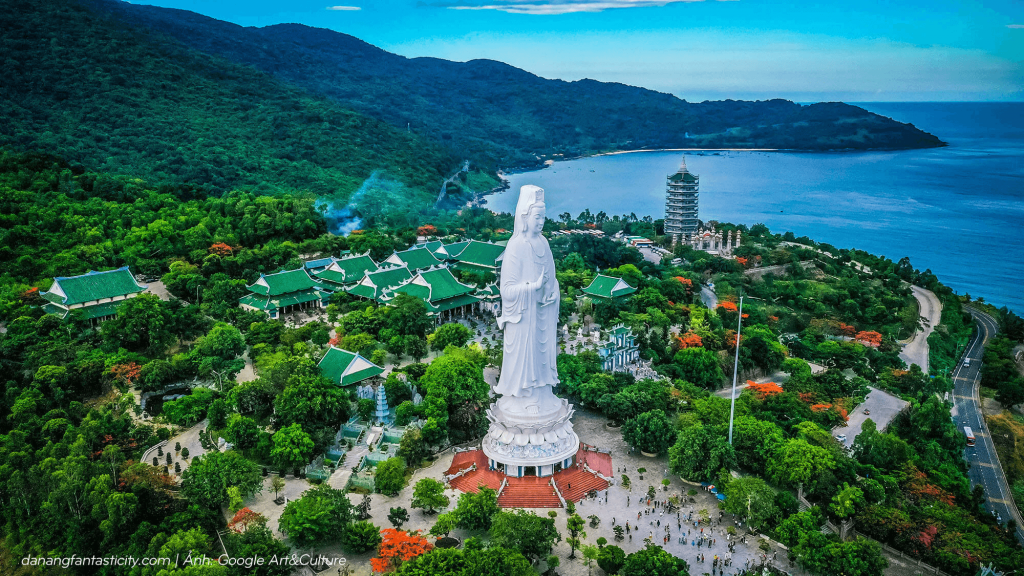
Linh Ung Bai But Pagoda in Da Nang (also known as Linh Ung Son Tra Pagoda) is one of the city's most famous spiritual tourist attractions. The pagoda is located in a "mountain-backed, sea-facing" position on the Son Tra Peninsula, with its back against the mountain and its face towards the East Sea, creating a scene that is both majestic and poetic. In particular, visitors will be overwhelmed by the 67-meter-high statue of Quan Am Buddha, which stands out against the sky.
What are you waiting for? Join Queen Cafe Bus to discover the sacred beauty of this temple.
1. Linh Ung Pagoda, Bai But, Da Nang – A-Z Discovery Guide
1.1. Overview of Linh Ung Pagoda in Bai But, Da Nang
Linh Ung Pagodais But Beach It is the largest temple in the "Linh Ung Temple triangle" in Da Nang. The temple was built in 2004 and inaugurated in 2010 on a 20-hectare site, making it the largest temple in the city.
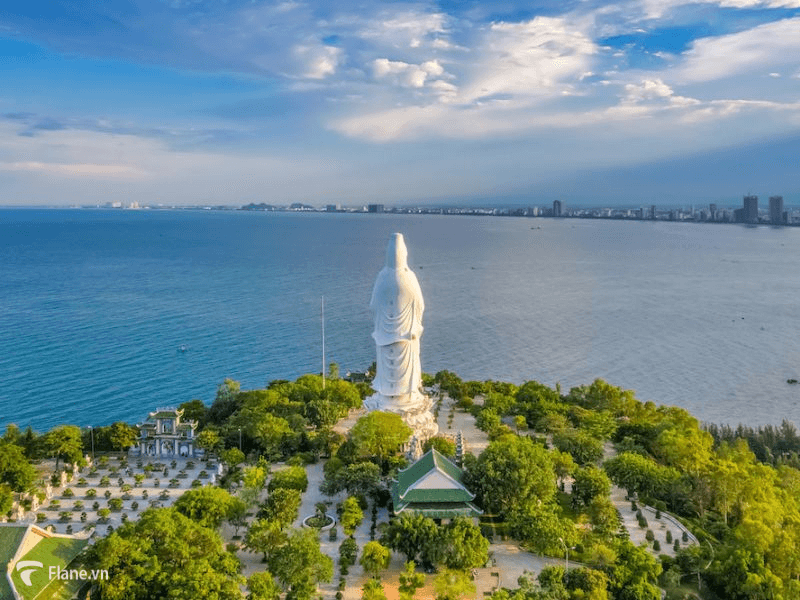
The highlight that has made Linh Ung Son Tra Pagoda famous is the 67-meter-tall statue of Quan The Am Buddha, with a lotus base diameter of 35 meters – this is the tallest Quan Am statue in Vietnam (and is even considered the tallest in Southeast Asia).
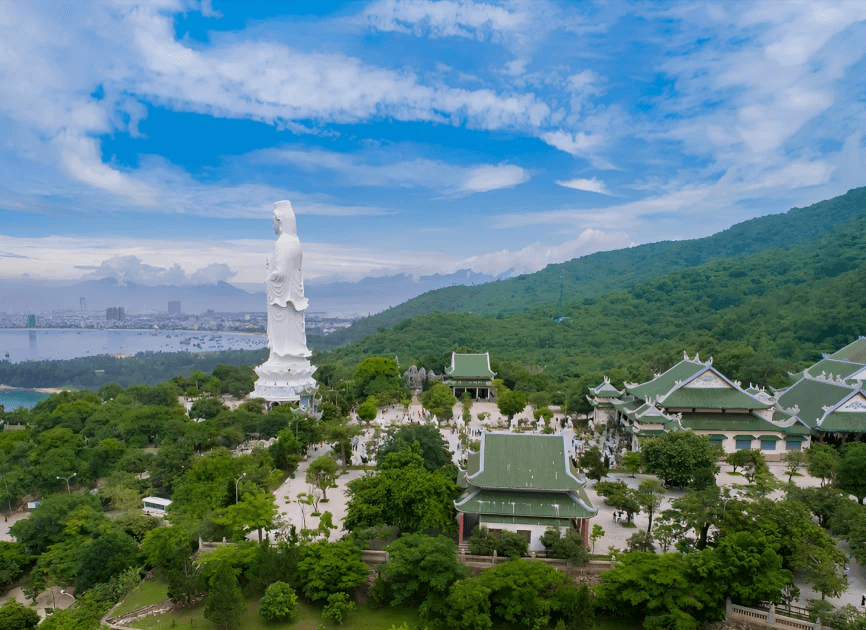
1.2. The "mountain-backed, sea-facing" location of Linh Ung Pagoda on Son Tra Peninsula
Linh Ung Son Tra Pagoda is located in the Bai But area, Son Tra Peninsula, about 9-10 km northeast of downtown Da Nang. The pagoda sits halfway up Son Tra Mountain, with its back leaning against the sturdy mountainside and its front facing the vast sea.
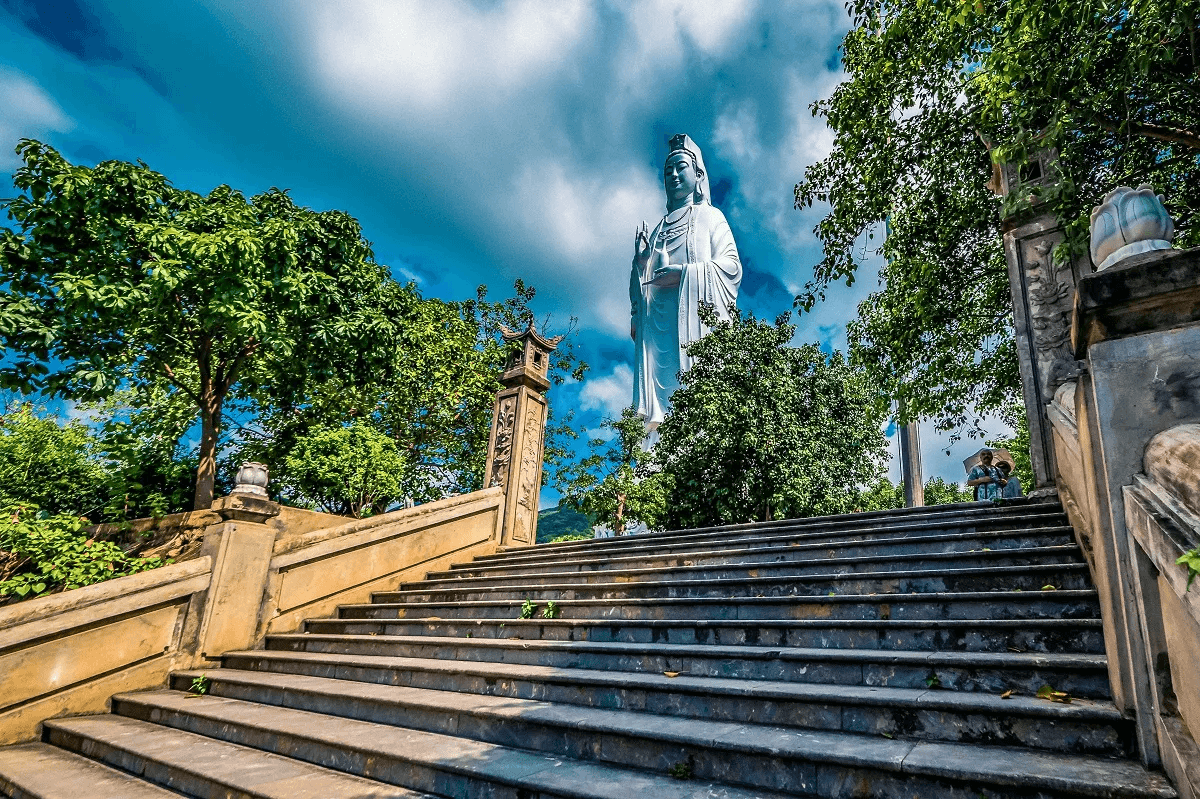
This prime location, "backed by mountains and facing the sea," creates a tranquil and sacred space while allowing visitors to take in the breathtaking view of Da Nang's sea and sky. From the temple grounds, visitors can see the entire Da Nang Bay, white sandy beaches, and endless green trees blending with the vast ocean, creating a picturesque scene that is hard to match anywhere else.
1.3. Distinguishing Linh Ung Son Tra Pagoda from the other two Linh Ung Pagodas in Da Nang
Among them, Linh Ung Bai But Pagoda (Son Tra) is a newly built pagoda (construction began in 2004) but is the largest in scale, famous for its 67-meter-tall statue of Quan Am Buddha and its unique mountain and sea scenery.
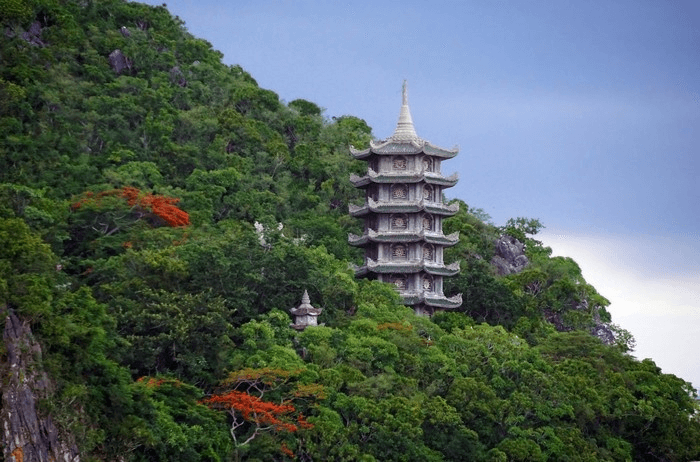
Linh Ung Non Nuoc Pagoda (Ngũ Hành Sơn) is the oldest pagoda, built during the reign of King Minh Mang in 1825. It is located on Thuy Son Mountain and features traditional architecture and many precious artifacts.
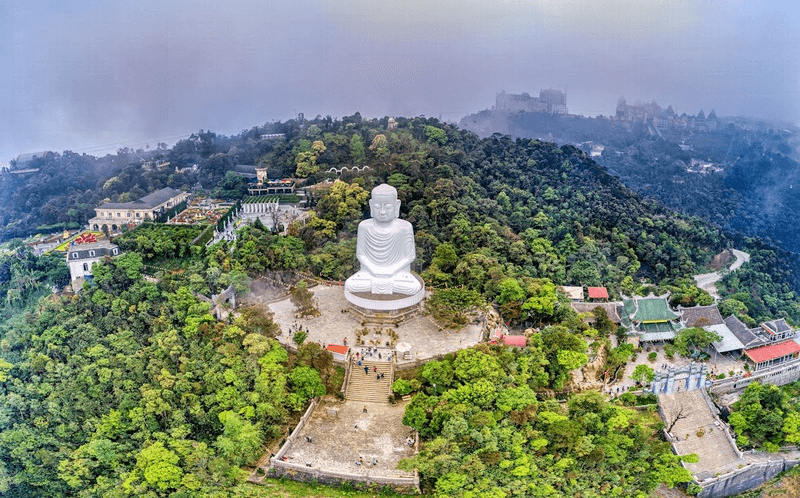
Linh Ung Pagoda on Ba Na Hill stands atop Mount Chua (Ba Na Hills) at an elevation of approximately 1,500 meters. Inaugurated in 2004, it is notable for its majestic 27-meter-tall statue of Buddha Shakyamuni towering above the clouds. All three pagodas possess a sacred beauty and are linked to local legends, forming a "spiritual triangle" that protects the coastal city of Da Nang.
2. Directions to Linh Ung Pagoda, Bai But Beach, Da Nang
2.1. How to get to Da Nang from other provinces
2.1.1. By sleeper bus (most economical and convenient)
When traveling to Da Nang, you can choose from many modes of transportation such as airplanes, trains, or buses. Among them, long-distance sleeper buses are always a favorite choice for many people because of their comfort, convenience, and affordability.
Queen Cafe Bus understands this and wants to offer you a truly wonderful travel experience. With spacious interiors, attentive service, and convenient schedules, Queen Cafe Bus is confident it will be a relaxing start to your journey exploring Da Nang.
Below is a price list for your reference:
| JOURNEY | PRICE | BOOK TICKETS |
| Hanoi ⇔ Da Nang | 450.000 VNĐ – 750.000 VNĐ | Place it here |
| Hue ⇔ Da Nang | 150.000 VND/pax | Place it here |
| Hoi An ⇔ Da Nang | 150.000 VND/pax | Place it here |
| Ninh Binh ⇔ Da Nang | 450.000 VNĐ – 500.000 VNĐ | Place it here |
| Quang Binh ⇔ Da Nang | 250.000 VNĐ – 300.000 VNĐ | Place it here |
📞 For attentive consultation and the fastest ticket booking, you can contact:
- Hotline: 0906.413.468 – 0914.215.809
- Zalo: 0905.746.884 – 0914.215.809
- Website: https://queenbus.com.vn/
- Fanpage: Queen Cafe Open Bus

2.1.2. By airplane
To save time, many tourists choose to fly to Da Nang. In just over an hour, you'll arrive at the airport and be ready to explore this beautiful coastal city. However, consider the following points:
- Actual time may not be as fast as expected: You will spend extra time traveling to the airport, checking in, waiting for your luggage, and traveling from the airport to Linh Ung Pagoda.
- High costs and additional expenses: Airfare fluctuates seasonally, and additional fees may apply for baggage, seat selection, or transportation from the airport to Bai But.
- Baggage restrictions and risk of delays/cancellations: Carrying bulky luggage is quite inconvenient, and your schedule may also be affected by the risk of flight delays or cancellations.

2.1.3. By train
If you travel to Da Nang by train, you will have a rather interesting experience, especially on the North-South Thong Nhat line. However, you should consider the following points:
- Long travel time: Boats often take a long time, have fixed schedules, and are prone to delays, making it difficult to plan your day trip.
- Experience and comfort: The train compartment can be crowded and noisy. If you don't choose a sleeper berth, sleeping at night may not be comfortable. Additionally, the train shakes violently when passing through Hai Van Pass, which can cause motion sickness.
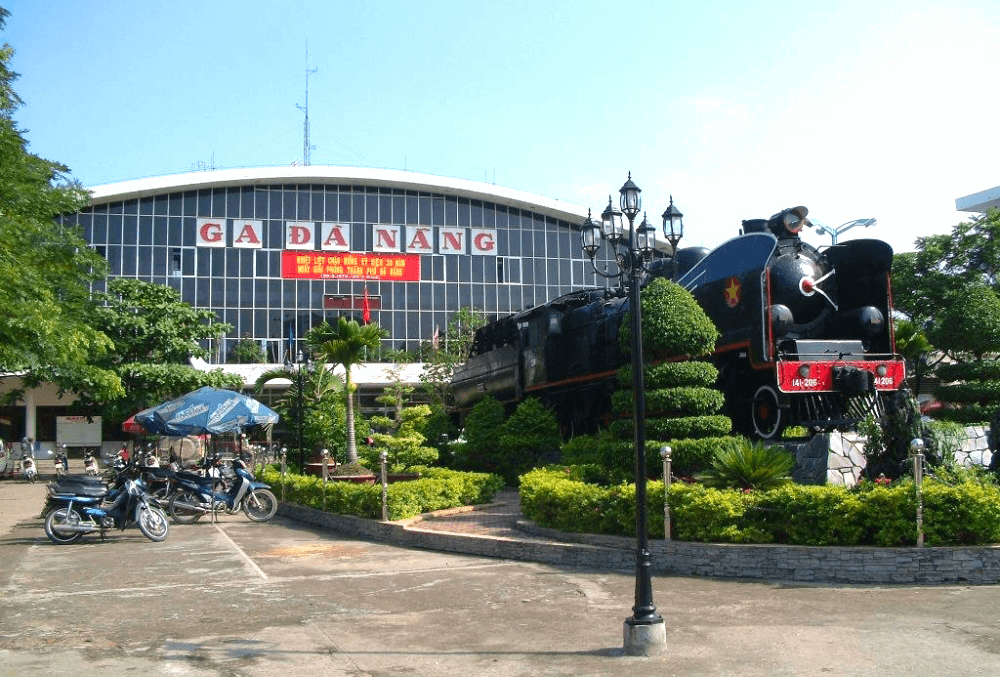
- Baggage and incidental expenses: Carrying bulky luggage is quite inconvenient. In addition, you will still incur additional transportation costs from Da Nang Station to Linh Ung Bai But Pagoda.
2.2. Directions from downtown Da Nang to Linh Ung Bai But Pagoda
The route to Linh Ung Bai But Pagoda from downtown Da Nang is quite convenient. With a distance of about 10-15km, it only takes about 30-35 minutes. Below are a few transportation options you can consider for easier travel.
2.2.1. Travel by motorcycle to Linh Ung Pagoda in Bai But, Da Nang
Motorcycling to Linh Ung Son Tra Pagoda is a favorite choice for many young people. Riding a motorcycle allows you to be flexible with your time and stop along the way to take photos. Park your motorcycle at the Linh Ung Pagoda parking lot, which is supervised by Buddhist followers (usually free of charge; visitors can leave a small donation as an act of merit). Renting a motorcycle in Da Nang is quite easy; you can check out the following locations:
Dawn
- Address: 36 Ta My Duat Street, Son Tra Ward, Da Nang.
- Contact: 0986 862 986
- Price: 80,000 – 130,000 VND
Han River
- Address: 86/26 Thi Sach Street, Hoa Cuong Ward, Da Nang
- Contact: 0935 304 050
- Price: 80,000 – 130,000 VND
Huu Vy
- Address: 297 Chinh Huu, Son Tra Ward, Da Nang
- Contact: 0932 445 145
- Price: 80,000 – 130,000 VND
*Note: The road up to the peninsula has steep, winding sections. You should use a manual transmission vehicle or a powerful motorcycle, drive carefully, and fill up your gas tank before heading up, as there are no gas stations on the mountain.
2.2.2. Travel by car/taxi/Grab to Linh Ung Son Tra Pagoda
If you are traveling in a large group or with family members including elderly people and children, you can take a car, taxi, or Grab to Linh Ung Pagoda. The drive from downtown Da Nang to the pagoda takes about 30 minutes. A one-way taxi fare costs around 150,000 – 200,000 VND. The advantage of traveling by car is comfort and safety, avoiding sun and rain. Local drivers also know the roads well and can stop at scenic spots for you to take photos (for example, the section with a panoramic view). My Khe beach).
3. Things to know when visiting Linh Ung Pagoda on Son Tra Peninsula
3.1. Opening hours and admission fees for Linh Ung Pagoda, Bai But, Da Nang
3.1.1. Official operating hours of Linh Ung Pagoda, Bai But, Da Nang
Linh Ung Pagoda in Bai But, Da Nang is open to visitors from early morning until evening. According to the pagoda's management, opening hours are from 6:00 AM to 9:00 PM daily. This is also when the monks and nuns at the pagoda perform their Buddhist duties and welcome visitors from all over.
However, visitors can visit the temple grounds outside of office hours to enjoy the scenery (the temple gate remains open at night for local residents to worship, but quiet must be maintained).
3.1.2. Admission fee to Linh Ung Pagoda, Bai But, Da Nang
Visitors can tour Linh Ung Bai But Pagoda in Da Nang completely free of charge. The pagoda does not charge an entrance fee or any other tour fees. This is a public spiritual site, so everyone is welcome to visit and worship freely. On holidays and during Tet, the pagoda is flooded with visitors, but it remains open free of charge. Visitors are simply asked to maintain cleanliness and order in this sacred place.
3.1.3. Parking fees at the temple
At Linh Ung Pagoda, you can park your motorbike or car in the spacious parking lot near the entrance gate. Parking fees are not fixed; you can donate whatever amount you wish into the charity box. Although parking is free, always lock your vehicle carefully and do not leave any valuables in the car to ensure safety.
3.2. The best time to visit Linh Ung Pagoda in Bai But, Da Nang

3.2.1. Seasonal: It is recommended to visit from March to September.
Da Nang has a distinct two-season climate: the dry season (February to September) and the rainy season (October to January). The best time to visit Linh Ung Bai But Pagoda is during the dry season, from around March to September each year. At this time, Da Nang has little rain or storms, with sunny weather and calm seas. Especially from April to August, which is summer, the sky is clear blue, making it very convenient for sightseeing and taking pictures. Son Tra Peninsula.
Conversely, from October onwards, the rainy season begins, and the road to the temple can become slippery and dangerous, with visibility limited by rain or fog. Therefore, visitors should consider visiting Linh Ung Pagoda during the dry season for the most complete experience.
3.2.2. By day: 6:00 AM – 9:00 AM is the most beautiful time of day.
Early morning is the best time of day to visit Linh Ung Son Tra Pagoda. From around 6 to 9 a.m., the morning sun is gentle and not yet harsh, and the air is fresh and cool, ideal for strolling and sightseeing.
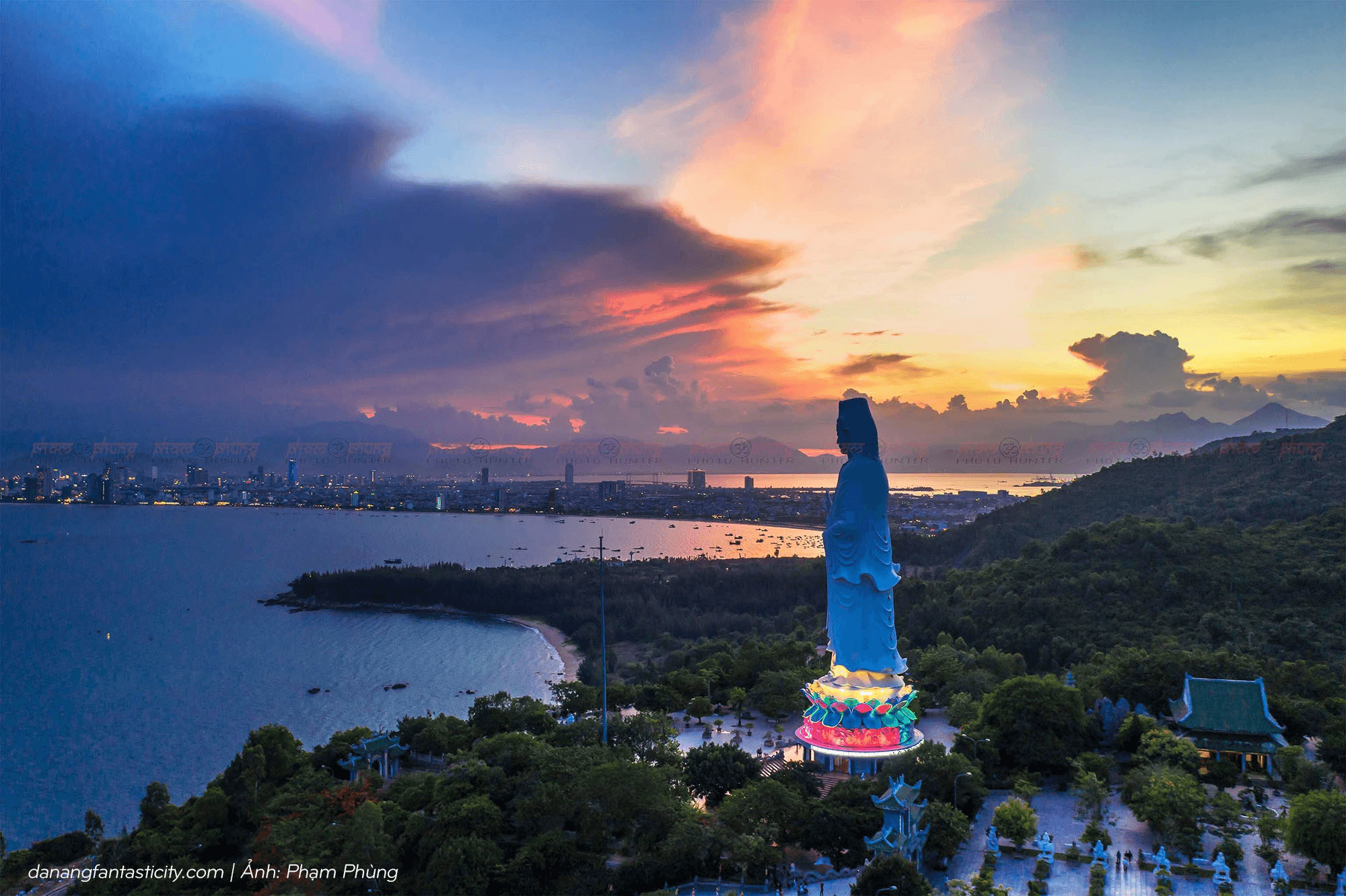
Standing at the foot of the Quan Am Buddha statue in the early morning, visitors will be able to admire the stunning scenery: white sandy shores curving around the deep blue sea, with the city of Da Nang still shrouded in mist in the distance. This is also when the temple is less crowded and quieter, allowing you to fully experience the tranquility of this Buddhist sanctuary.
*Note: The midday sun is very intense on Son Tra Peak, so you should avoid visiting between 12:00 PM and 3:00 PM to prevent heatstroke.
3.3. Regulations on Attire and Cultural Conduct at Linh Ung Bai But Pagoda
When visiting Linh Ung Pagoda in Bai But, Da Nang, visitors must comply with the rules regarding dress and behavior to maintain the sanctity of this spiritual place:
- Dress appropriately: Wear modest, respectful clothing when entering a temple (long pants, long-sleeved shirts). Avoid wearing shorts, short skirts, sleeveless tops, or overly thin clothing.
- Solemn demeanor: Maintain order and speak softly. Do not laugh, joke, push, shove, or cause noise within the temple grounds, especially in the main hall.
- Compliance with internal regulations: Remove your shoes and sandals when entering the temple. Do not take photos or videos in the main hall if there is a sign prohibiting it. Absolutely do not touch or climb on the Buddha statues, especially the Arhat statues along the walkway, to ensure solemnity.
- Maintain general hygiene: Do not litter or pick flowers or break branches in the temple garden. If you bring offerings, please clean up after worship. You may burn incense to worship the Buddha, but do not burn too much and cause smoke.
- Civilized behavior: Respect monks, nuns, Buddhists, and those around you. If you encounter a group of people chanting sutras, avoid disturbing them. Visitors may ask for drinking water, restroom facilities, etc. at the temple, but should express gratitude after receiving assistance.
4. Discover the unique architecture of Linh Ung Pagoda in Bai But, Da Nang
4.1. The Three-Gate Entrance and the Path Leading to the Main Hall of Linh Ung Son Tra Pagoda
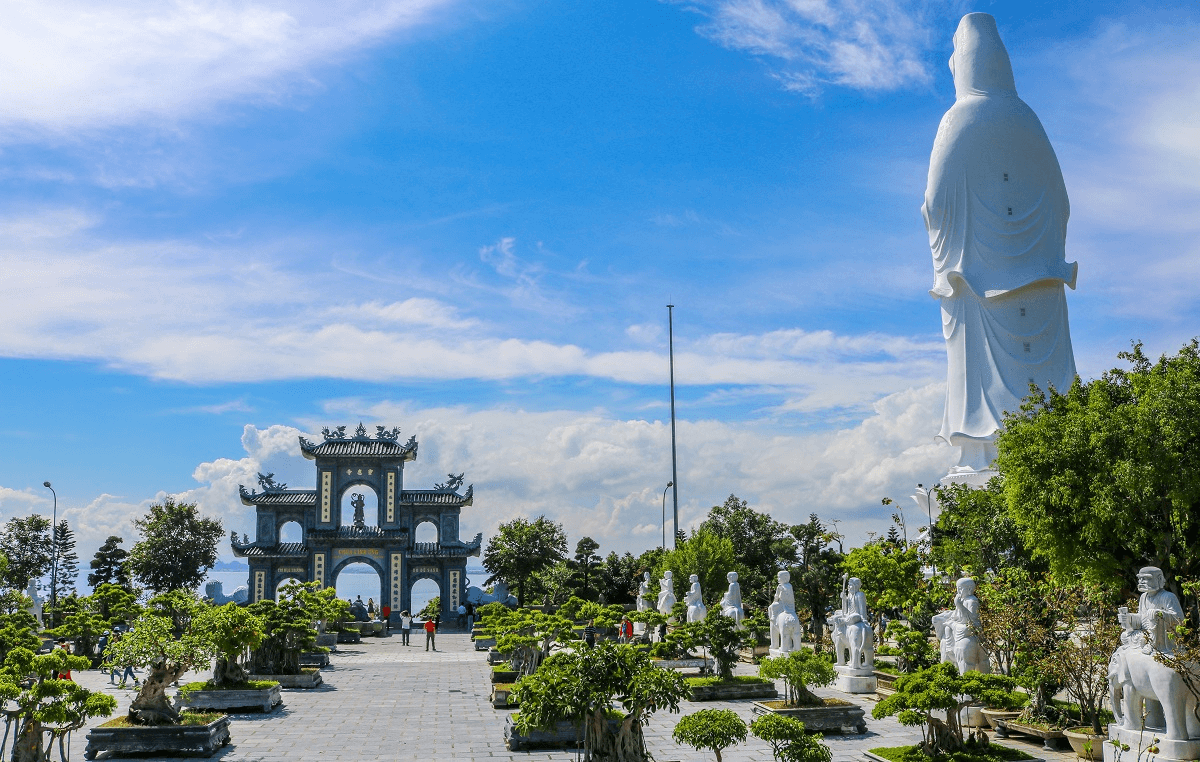
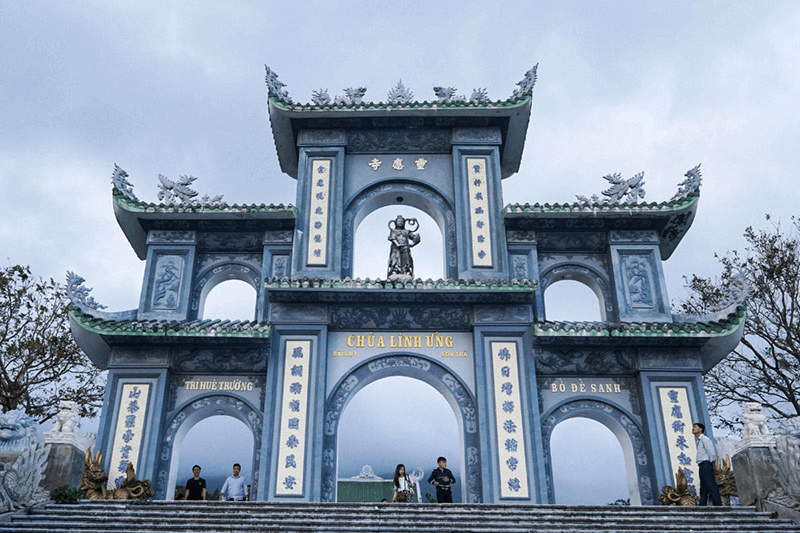
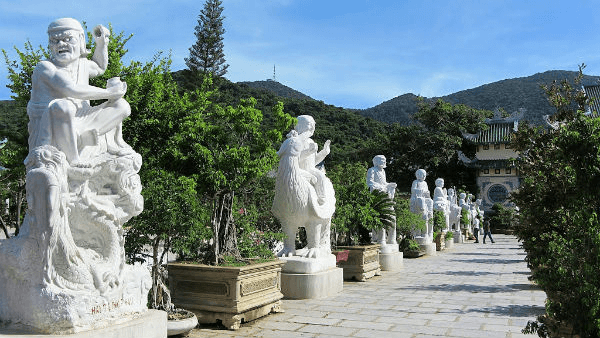
The Three-Gate Entrance of Linh Ung Bai But Pagoda was built in traditional architecture, featuring three gateways and curved tiled roofs. Passing through the gate, you will see the path leading to the main hall, flanked by rows of 18 white stone Arhat statues, intricately carved. Each statue stands about 1.5 meters tall with different expressions, creating a solemn and impressive space.
4.2. Main Hall: A solemn and imposing place of worship
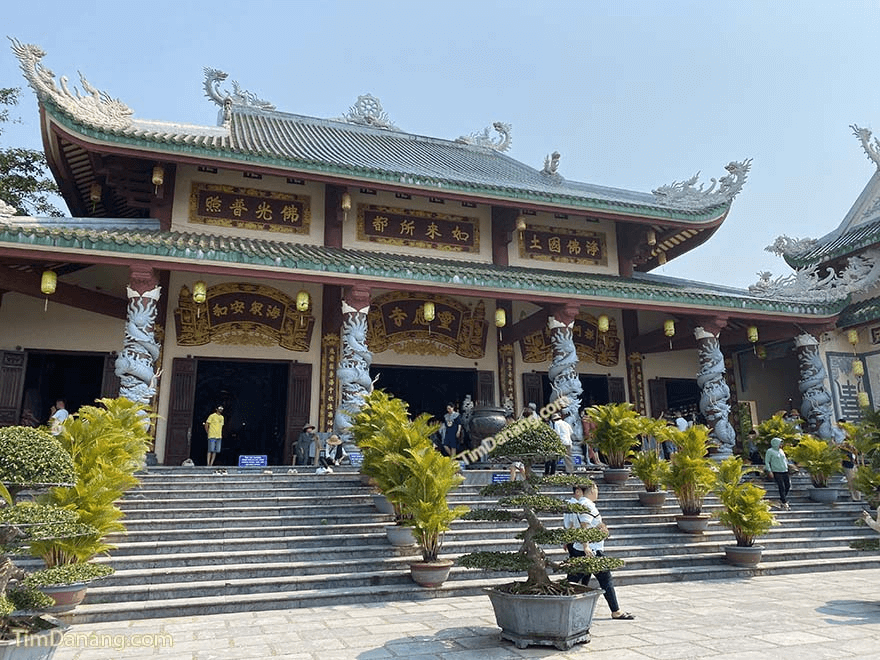
The main hall of Linh Ung Bai But Pagoda is the largest building, combining traditional and modern architecture. Its gray-green dragon-scale roof tiles with curved eaves and dragon statues create a majestic appearance.
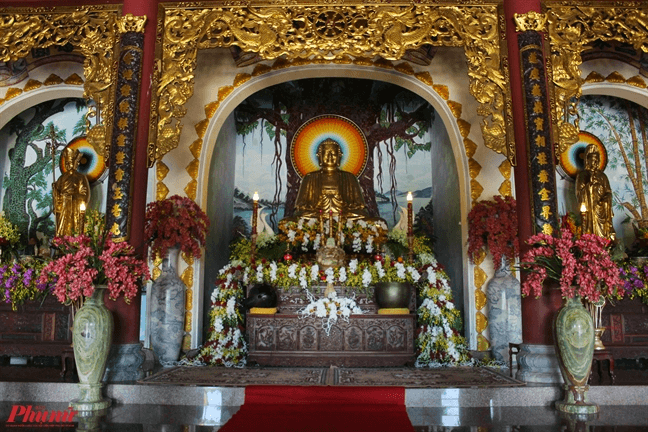
Inside, the worship space is very solemn:
- Center: Statue of Buddha Shakyamuni
- Right: Statue of Bodhisattva Avalokitesvara
- Left: Statue of Bodhisattva Ksitigarbha
All the statues are large in size, painted in bright colors and gilded with gold, bringing a sense of serenity and peace to visitors.
4.3. A row of 18 solemn Arhats statues along the walkway
A unique highlight at Linh Ung Pagoda is the 18 Arhat statues carved from solid white stone, arranged in two rows along the path to the main hall. Each statue is approximately 1.5-1.8 meters tall, with different expressions and emotions, representing the emotional spectrum of human beings. This row of statues not only symbolizes the protection of the Dharma, but also welcomes Buddhists and visitors to this sacred place.
4.4. Statue of Quan Am Buddha – Symbol of Linh Ung Pagoda in Bai But
4.4.1. The tallest statue of Quan Âm in Vietnam
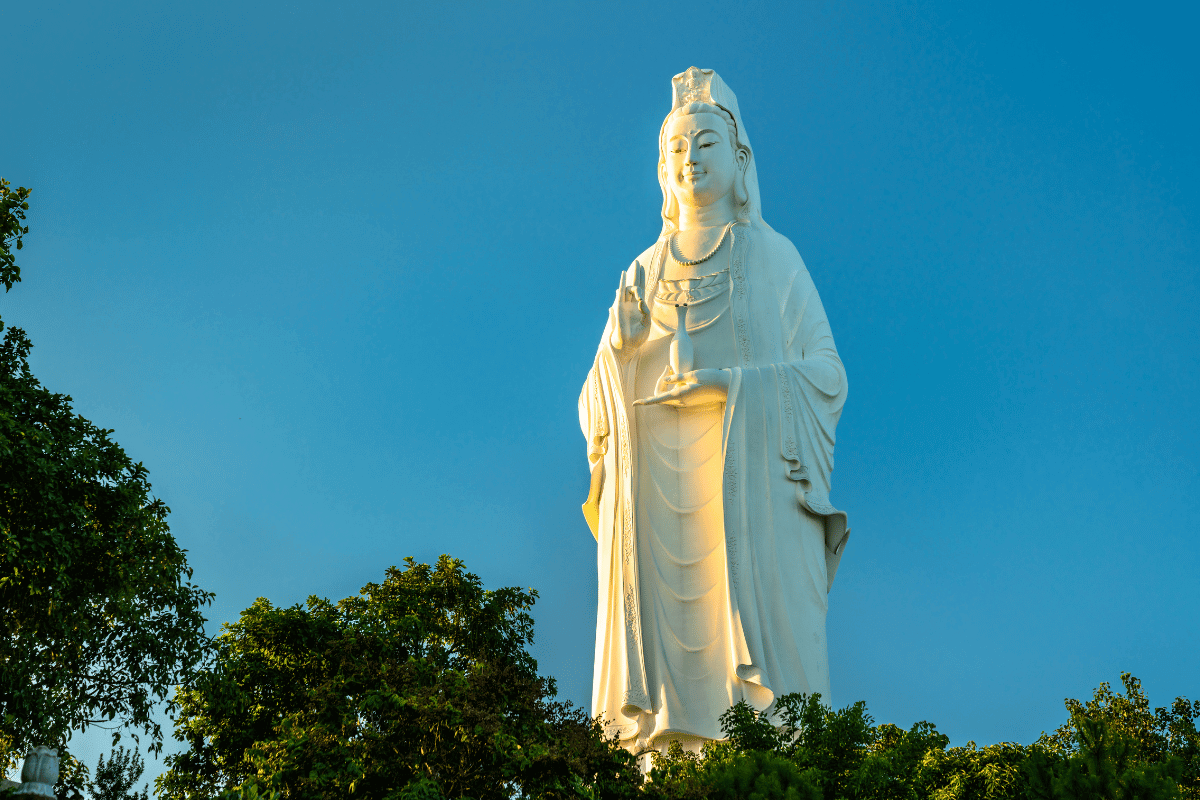
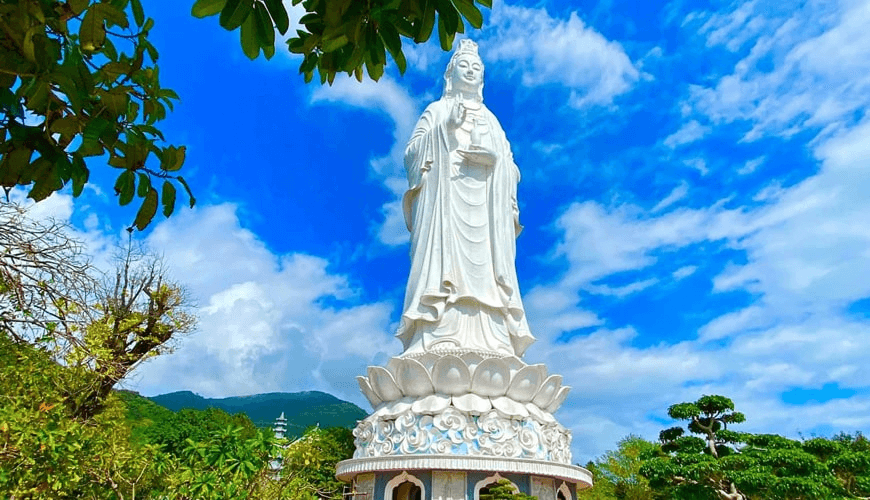
The most striking feature at Linh Ung Pagoda is the 67-meter-tall statue of Quan The Am Buddha, known as the tallest Quan Am statue in Vietnam. The statue stands majestically on a 35-meter-high lotus pedestal, with a benevolent face and eyes gazing down at the sea as if protecting the people. From afar, visitors can see the striking white statue of Quan The Am Bodhisattva, resembling a spiritual lighthouse for the city.
4.4.2. The 17-story "Buddha within Buddha" architecture inside the statue of the Buddha at Linh Ung Pagoda in Bai But, Da Nang
Beyond its imposing exterior, the interior of the Guanyin Buddha statue at Linh Ung Bai But Pagoda features a unique 17-story architecture. Each floor is designed with hollow spaces and houses a total of 21 small Buddha statues, representing the concept of "Buddha within Buddha." Visitors can climb up 12 floors via the staircase to view the statues and enjoy the scenery through the windows.
4.5. The 9-story Stupa and other architectural structures
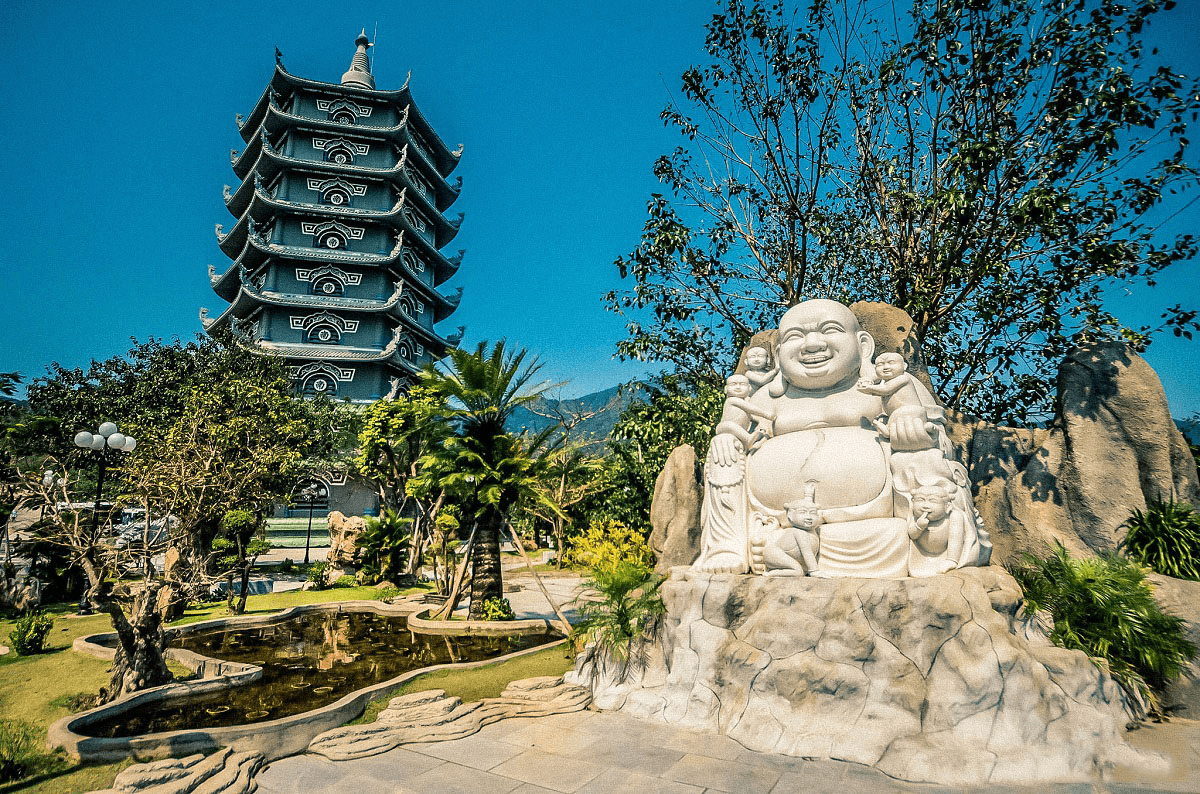
Within the grounds of Linh Ung Bai But Pagoda, there are many other notable architectural structures. The most prominent is the 9-story Xa Loi Tower with a curved tiled roof, which houses the Buddha's relics and those of holy monks. In addition, the pagoda also has a monastery, a lecture hall, a monk's quarters, and two gardens with Buddhist significance, Lam Ty Ni and Loc Uyen, all of which are meticulously arranged, bringing a feeling of tranquility and peace.
5. Description of Linh Ung Pagoda in Bai But, Da Nang
5.1. The story of the formation of Bãi Bụt and the tale of the Buddha statue washed ashore
The name Bãi Bụt is associated with a sacred legend. According to legend, during the reign of King Minh Mạng, fishermen discovered a Buddha statue drifting on the sandy beach. They built a small temple and reverently worshipped it. Since then, this area of the sea has been called Bãi Bụt (meaning "Buddha"), and the people believe that thanks to the Buddha's protection, the waves are calm, the sea is peaceful, and fishing is favorable. Later, a large pagoda was built on the site of the old temple, which is now Linh Ứng Bãi Bụt Pagoda.
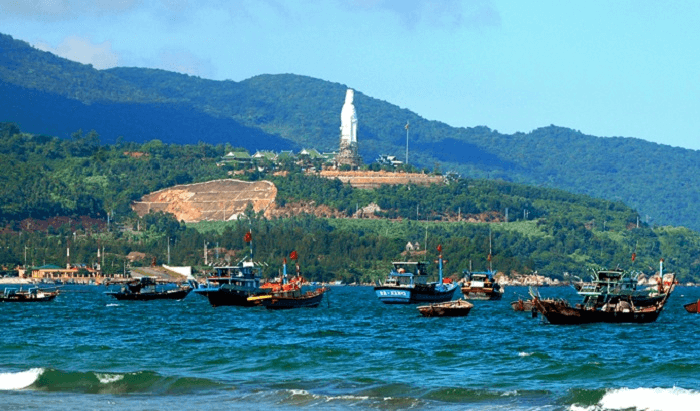
In addition to the above legend, folklore also recounts another myth: Bodhisattva Guanyin carried the Infant Buddha from the open sea to the shore of Son Tra, bestowing blessings upon this land. Therefore, the peninsula was named Bai But to commemorate the merits of Mother Guanyin. Although legends vary from place to place, they all express the people's deep belief that the Buddhas and Bodhisattvas always watch over and protect them.
5.2. The mystery of the Buddha statues at Linh Ung Son Tra Pagoda emitting a halo
A mysterious phenomenon that adds to the mystique of Linh Ung Bai But Pagoda is the halo of light that shines around the statue of Quan Am Buddha. According to the temple's records, the halo has appeared in the sky above the statue's peak on multiple occasions, particularly in 2019 and 2020. While scientists explain it as a light scattering phenomenon, many people still consider it a miraculous event that enhances the temple's sacredness.
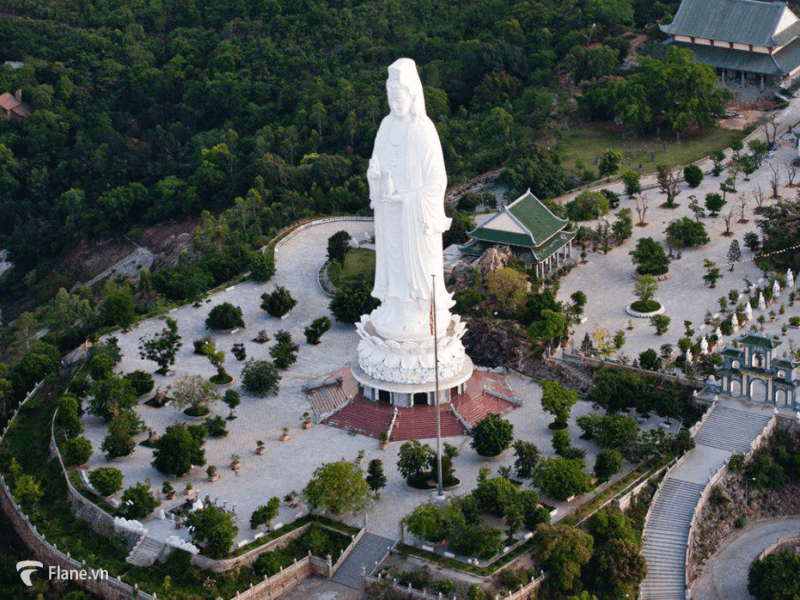
However, the miraculous coincidence of the halo appearing precisely when the temple held events or during Buddhist holidays led the people to believe that Mother Quan Am was manifesting herself, bestowing blessings and signaling good fortune for Da Nang. The temple's memorial house still preserves many photographs capturing the moments when the statue of the Buddha radiated a uniquely dazzling halo.
5.3. Belief in "Mother Quan Am" protecting the people of Da Nang
For the people of Da Nang, Linh Ung Bai But Pagoda is not only a spiritual and cultural destination but also a place where they place their sacred faith. They believe that since its installation, the 67-meter-tall statue of Quan Am Buddha has protected the city from storms, as many major storms that were forecast to make landfall have weakened or changed course.
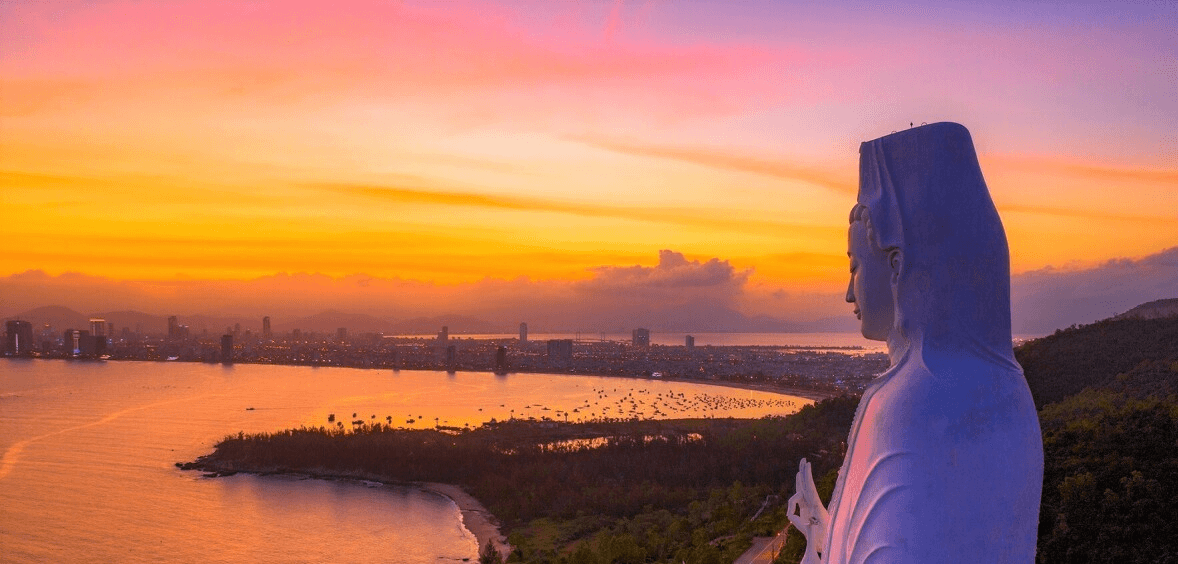
With the image of the Virgin Mary facing the East Sea like a windbreak, people often visit the temple to burn incense and pray, hoping that she will protect their families and bring them peace and favorable weather. Therefore, Linh Ung Temple and the statue of Quan Am have become a solid spiritual foundation in the lives of the people here.
6. One-day itinerary for visiting Son Tra Peninsula and Linh Ung Pagoda (suggestion)
6.1. Suggested itinerary for a complete exploration of Linh Ung Pagoda in Bai But, Da Nang
6.1.1. Morning
- Early morning (6:30): Starting your journey from the center of Da Nang, you will travel along the Hoang Sa coastal road to reach Linh Ung Bai But Pagoda. Spend about 1-2 hours sightseeing, offering incense, and taking photos.
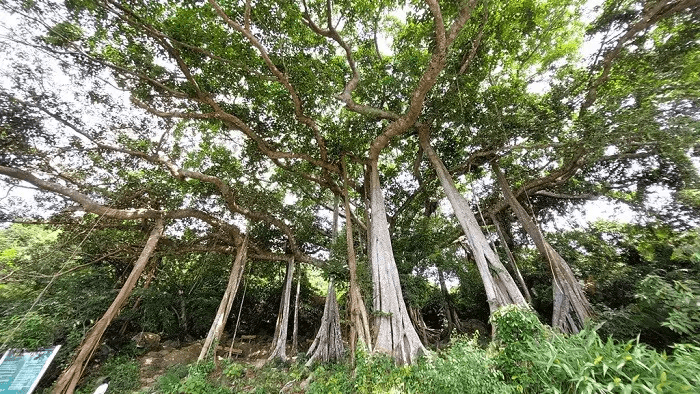
- Around 9:00: After leaving the temple, you can continue traveling a few more kilometers to visit The Thousand-Year-Old Banyan Tree – a giant ancient banyan tree with massive roots. After that, you can return to the city for lunch.
6.1.2. Afternoon
- Around 2:00 PM: From the foot of Son Tra Peninsula, you can continue your journey up Ban Co Peakisis – The highest peak of Son Tra with its unique statue of the Old Man playing chess. The road to the summit is quite steep, but once you reach the top, you will be rewarded with a breathtaking 360-degree panoramic view of Da Nang from above.
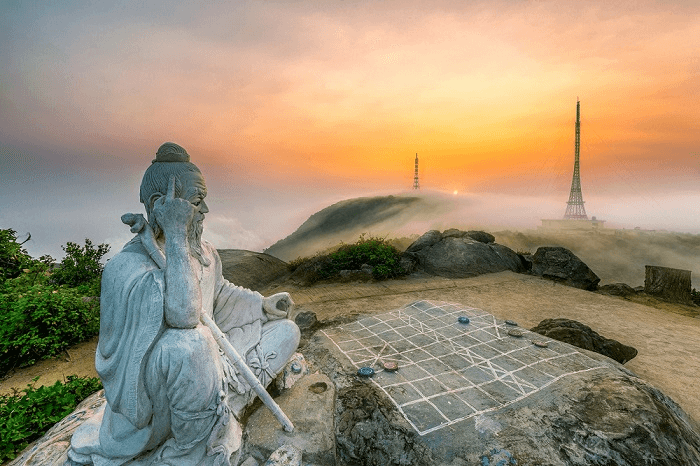
*Quick tip: After conquering the mountain peak, on your way down, you can stop by a roadside cafe or grassy area to watch the sunset. This will be a wonderful moment as the last rays of sunlight descend, bathing the city in a magical orange-yellow hue, bringing a day full of experiences to a close.
6.2. What's good to eat near Linh Ung Pagoda in Bai But, Da Nang?
The area near Linh Ung Pagoda is quite deserted, with few shops and restaurants. You can head to the foot of Son Tra Mountain or along the Hoang Sa - Vo Nguyen Giap coastal road (3-5 km from the pagoda) to enjoy local specialties.
Fresh seafood: Around the Bụt and Thọ Quang beaches, there are affordable seafood restaurants famous for shrimp, squid, crab, grilled fish, seafood hot pot, and more. You can visit seaside restaurants like Bé Mặn and Năm Đảnh to enjoy fresh, reasonably priced seafood in Da Nang.
- Salty Baby – Lot 9 Hoang Sa, Son Tra, Da Nang.
- Year of the Rooster – 139/59/38 Tran Quang Khai Street, Son Tra District, Da Nang City.
- Mrs. Thoi 1 – 96-98-100 Le Dinh Duong Street, Hai Chau District, Da Nang City.
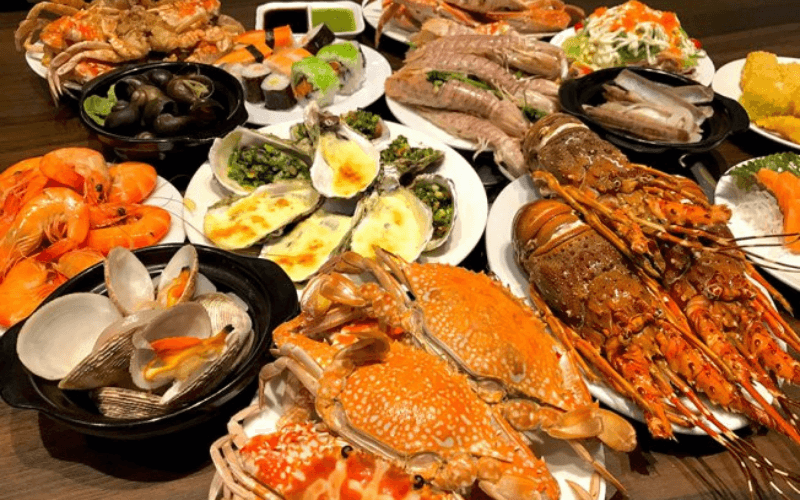
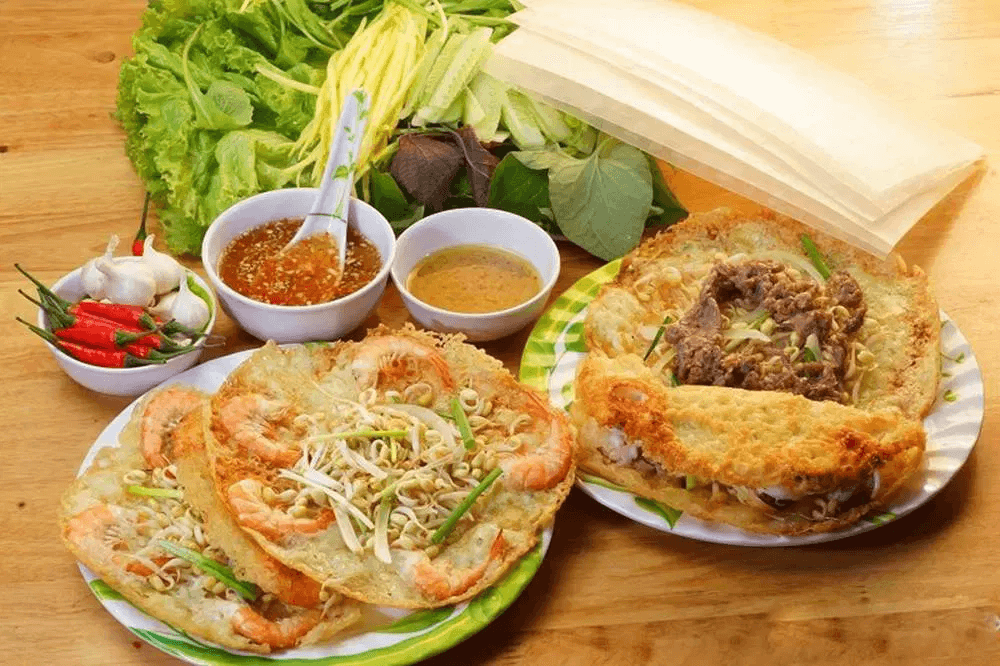
Danang's specialty dishes: On the way from the temple to the city center, you will pass many shops selling specialties such as banh xeo (Vietnamese pancakes) and nem lụi (grilled pork rolls), bun cha ca (fish cake noodles), Quang noodles, banh trang cuon thit heo (pork rolls with rice paper), and more. Stop to sample them—their rich flavors are unforgettable.
- Mrs. Duong's Pancakes – 280/23 Hoang Dieu Street, Hai Chau District, Da Nang
- Fish Cake Noodles by Mrs. Phiến – 63 Le Hong Phong Street, Hai Chau District, Da Nang
- Quán Trần (pork rolls) – 11 Nguyen Van Linh Street, Hai Chau District, Da Nang
Cafe with ocean view: If you want to relax, there are several cafes on the slopes of Son Tra Hill where you can sip your drink and enjoy the view of the sea from above. For example, you can visit Son Tra Marina or the cafes on Hoang Sa Street to enjoy the sea breeze.
- Son Tra Marina – Rạng BeachHoang Sa Street, Son Tra, Da Nang.
- Top View Bar – A La Carte Danang Beach – 200 Vo Nguyen Giap Street, Son Tra District, Da Nang City.
- Horizon Bar – Four Points by Sheraton – 118-120 Vo Nguyen Giap Street, Son Tra District, Da Nang City.
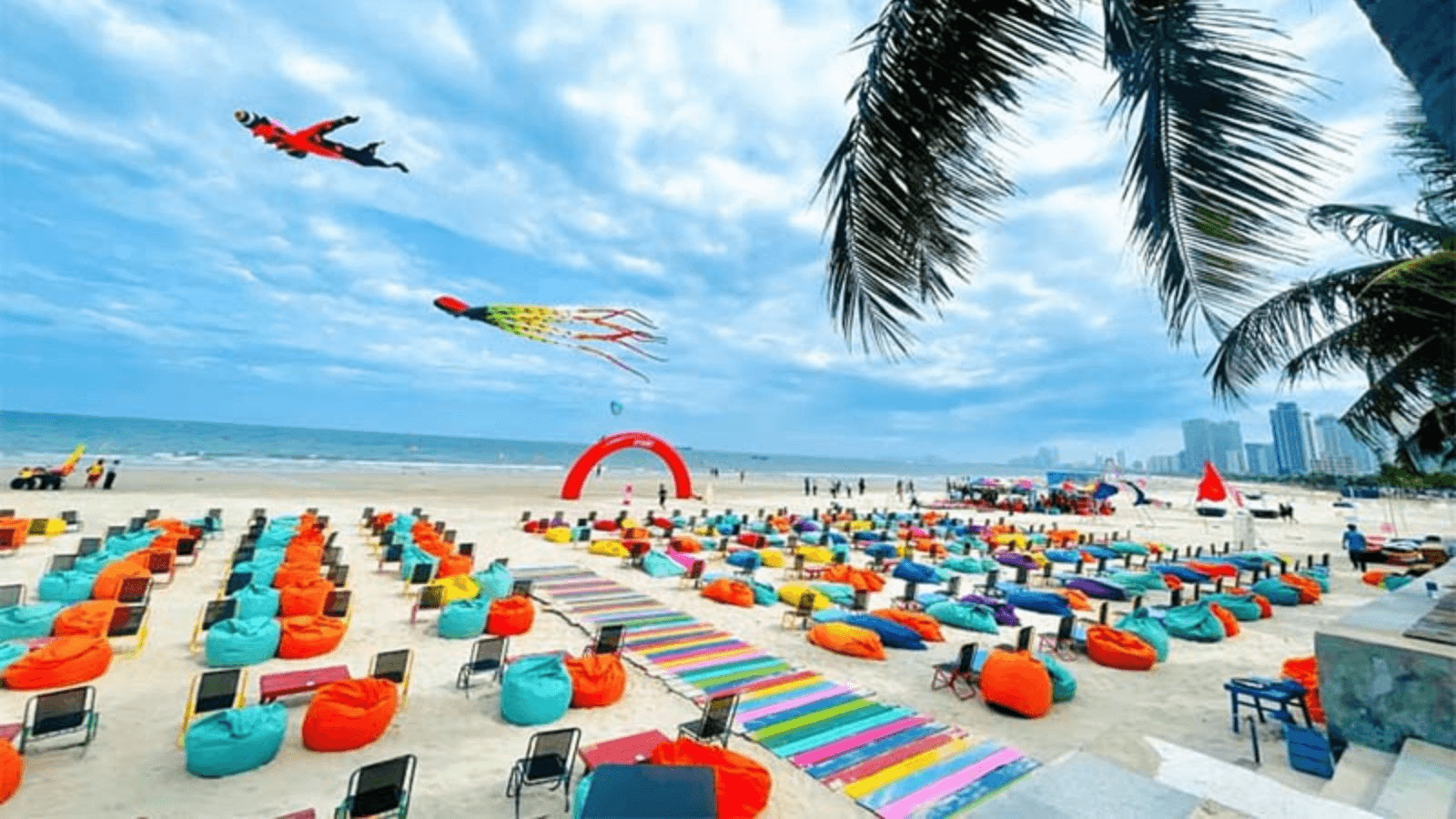
6.3. What to do at Bãi Bụt near Linh Ứng Sơn Trà Pagoda?
After visiting Linh Ung Pagoda, stop by Bai But, a pristine beach right at the foot of the pagoda, to continue enjoying the following exciting activities:
- Swim freely in the crystal clear, cool water.
- Stroll along the long stretch of smooth white sand, enjoying the sea breeze.
- Check in with a "virtual life" against the backdrop of the blue sea and the statue of the Buddha in the distance.

- Go camping and have a picnic with your friends (remember to clean up after you're done having fun!).
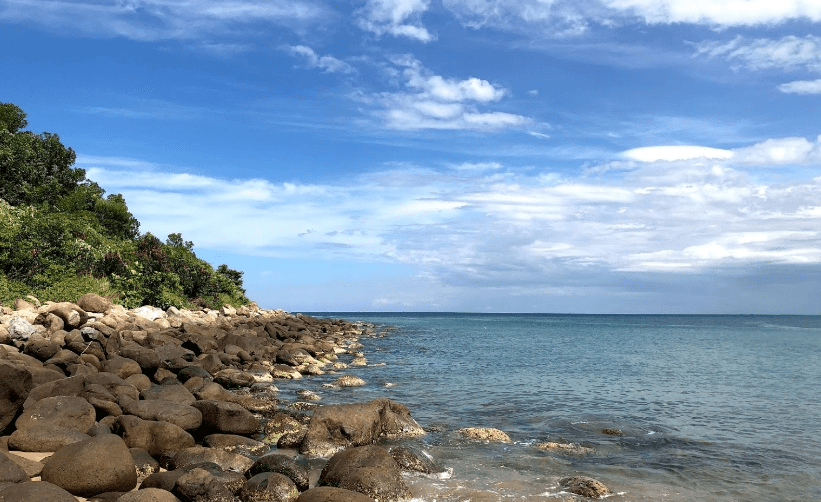
- Explore Obama Rock Beach (about 1 km away) with its unique rock formations, enjoy snorkeling, fishing, photography, and especially watching the stunning sunset!
7. Conclusion
Linh Ung Pagoda in Bai But Son Tra is a must-visit destination when traveling to Da Nang. This place combines both sacred spiritual values and beautiful natural scenery, attracting visitors from near and far. We hope that with the above guide, you have gained some information about Linh Ung Pagoda in Bai But.
For a complete and safe trip, Queen Cafe Bus will accompany you on every road!